Over 58 Lakh Forms Declared Uncollectable, Voters Face Provisional Removal
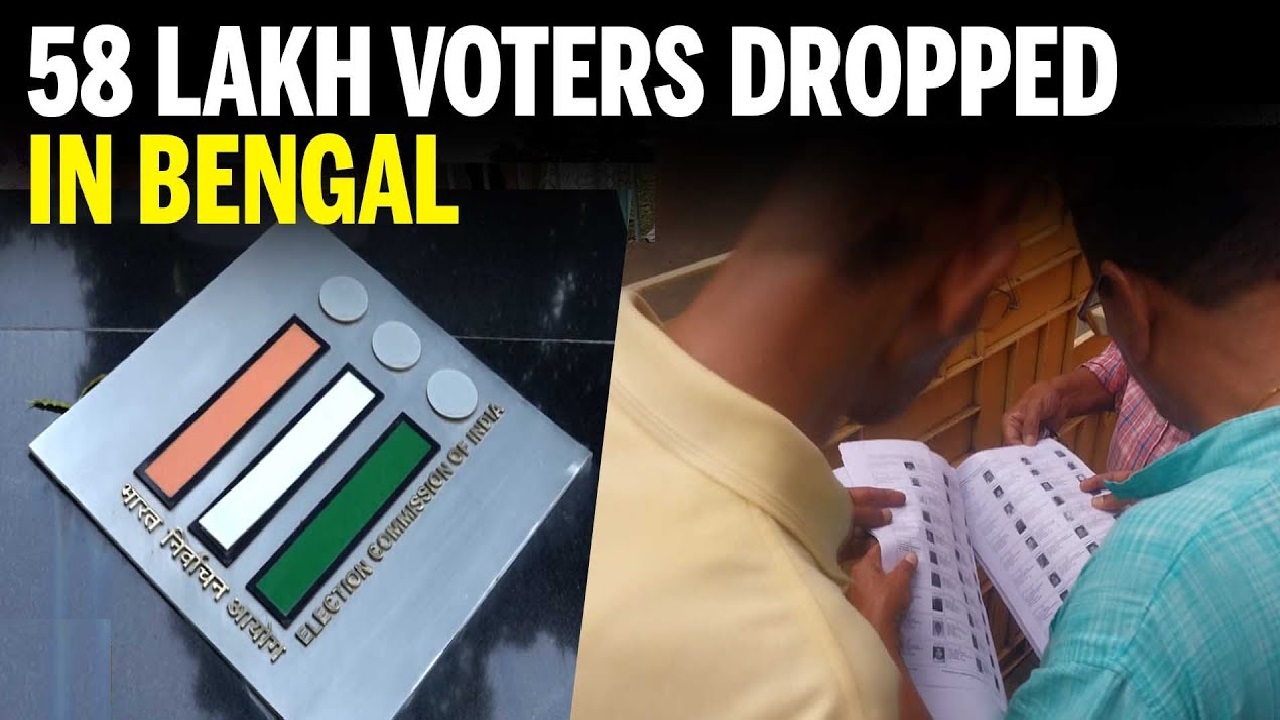
West Bengal’s electoral landscape is undergoing one of its most consequential churns in recent years. The Special Intensive Revision (SIR) of electoral rolls has identified more than 58 lakh enumeration forms as “uncollectable,” triggering provisional deletions ahead of the 2026 Assembly elections. While the Election Commission of India (ECI) frames the exercise as a routine clean-up to ensure accuracy, the sheer scale of deletions has ignited political controversy, legal scrutiny, and fears of disenfranchisement across the state.
Understanding the SIR: Purpose and Process
The Special Intensive Revision, launched on November 4, 2025, is a door-to-door verification drive aimed at updating electoral rolls by identifying deceased voters, migrants, duplicate entries, and other discrepancies. Of the nearly 7.67 crore enumeration forms distributed across West Bengal, around 7.07 crore have been digitized, translating to a state-wide digitization rate of 92.41 percent.
However, 58.17 lakh forms could not be collected or verified. These include approximately 23.98 lakh deceased voters, 19.65 lakh who have shifted residences, 1.32 lakh duplicate entries, and others classified under miscellaneous discrepancies. The draft electoral rolls, published on December 15, allow citizens to file claims and objections until January 8, 2026, before the final rolls are prepared.
Political Impact: High Stakes for the 2026 Assembly Polls
The provisional deletion of such a large voter segment has far-reaching political implications. Opposition parties, particularly the BJP, have welcomed the SIR as a long-overdue purge of “fake” and illegal voters, arguing that inflated rolls have distorted electoral outcomes. This narrative dovetails with the BJP’s broader messaging on migration and national identity, potentially consolidating its Hindu voter base ahead of 2026.
For the ruling Trinamool Congress (TMC), the risks are more immediate. Deletions appear concentrated in urban and border districts such as Kolkata, Murshidabad, and Malda—areas where minority and migrant populations form a crucial part of TMC’s electoral coalition. In several constituencies, the number of flagged voters rivals or exceeds victory margins from the 2021 elections, raising concerns that even partial deletions could alter outcomes in 20–30 marginal seats.
Chief Minister Mamata Banerjee has mounted an aggressive counteroffensive, branding the SIR a politically timed attempt at “votebandi.” By threatening protests, setting up block-level assistance camps, and alleging harassment-linked deaths, the TMC seeks to mobilize its base while framing the exercise as an assault on the poor and minorities. Whether this translates into voter consolidation or fatigue will be critical.
Digitization and Accuracy: Efficiency Versus Exclusion
Digitization is central to the SIR’s promise of cleaner rolls. With over 99.99 percent of voter data received, digital cross-verification has enabled authorities to detect inconsistencies such as age mismatches, duplicate EPIC numbers, and outdated addresses. High-digitization districts have reported smoother verification and fewer disputes, suggesting technology can significantly reduce long-term errors.
Yet the process has exposed sharp infrastructural gaps. Kolkata’s digitization rate lags at 74–76 percent, hindered by technical glitches, app failures, and reported non-cooperation. These shortcomings inflate the number of “uncollectable” forms and heighten the risk of eligible voters being wrongly flagged. For urban poor and transient populations, limited digital access compounds the problem, making the objections phase crucial for correction.
A Test of Trust, Technology, and Democracy
West Bengal’s SIR is more than an administrative exercise—it is a stress test for electoral integrity in a deeply polarized political climate. If managed transparently, with robust grievance redressal, it could strengthen voter confidence and set a benchmark for future revisions. If errors persist or corrections falter, however, the exercise risks undermining trust in institutions and reshaping the 2026 contest through exclusion rather than choice. Ultimately, the credibility of the process—and not just the numbers it produces—will determine whether the SIR is remembered as reform or rupture in Bengal’s democratic journey.
(With agency inputs)