


Anti-PM Slogans Thrust JNU Back into the National Spotlight
Jawaharlal Nehru University (JNU) has once again found itself at the heart of a national political debate. On January 5, 2026, slogans raised during a student gathering on campus quickly travelled beyond university walls, dominating television studios, social media platforms, and political statements. As in earlier moments of contention, JNU became a symbolic battleground where questions of dissent, nationalism, and institutional authority collided.
The Immediate Flashpoint: Protest, Videos, and Outrage
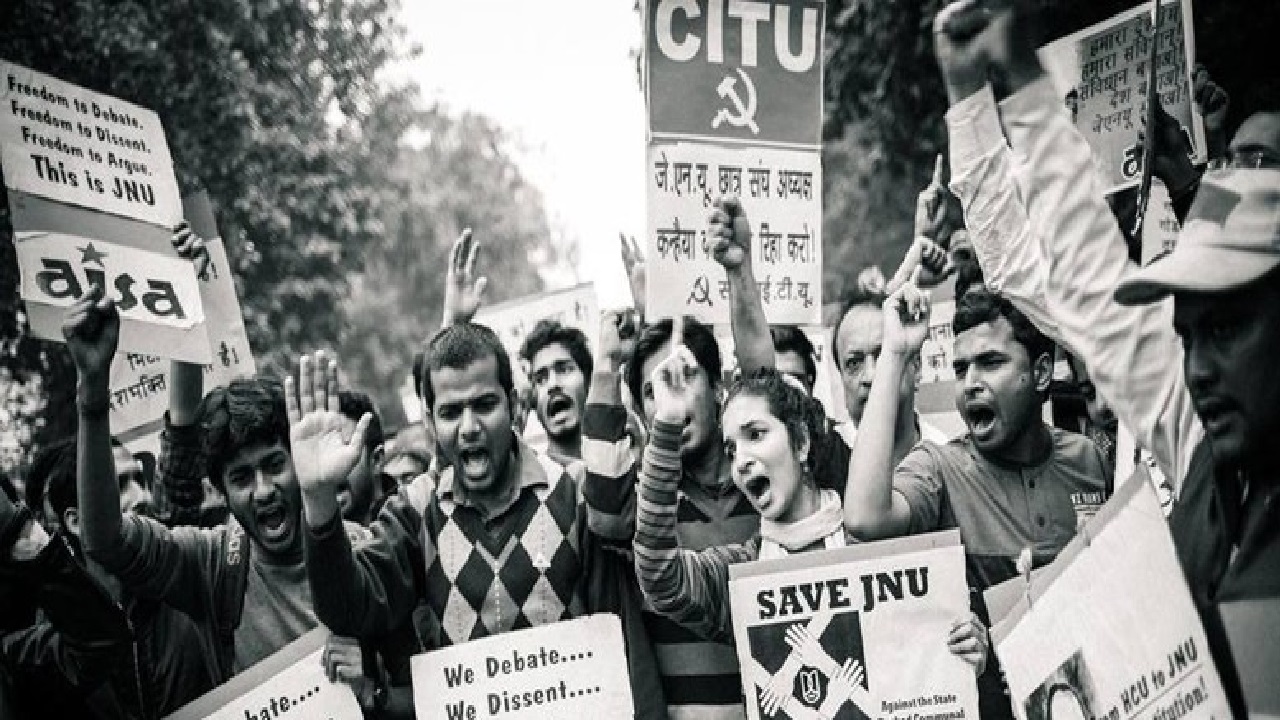
The controversy stemmed from a student event commemorating six years since the January 2020 hostel attack at JNU. The gathering followed the Supreme Court’s refusal to grant bail to former student leaders Umar Khalid and Sharjeel Imam in connection with the Delhi riots case. During the event near Sabarmati Hostel, videos surfaced showing students chanting sharp slogans against Prime Minister Narendra Modi, Home Minister Amit Shah, and prominent industrialists.
These visuals triggered swift reactions from political leaders and commentators, many of whom accused JNU of once again hosting “anti-national” activity. For supporters of the protest, however, the slogans reflected accumulated anger over unresolved violence on campus and what they view as shrinking democratic space.
How JNU’s Student Leadership Responded
The Jawaharlal Nehru University Students’ Union (JNUSU) strongly rejected allegations that the slogans constituted hate speech or incitement. Union president Aditi Mishra argued that the chants were ideological critiques rather than personal attacks, framing them as opposition to what she described as an authoritarian political ideology. According to her, the slogans emerged organically during an annual vigil and were not part of an organised call for violence or disruption.
Other student leaders echoed this position, emphasizing that the gathering was meant to memorialize the 2020 hostel attack, in which students and faculty were assaulted by masked individuals. They accused the university administration of acting under political pressure and attempting to criminalize dissent. While some leaders stopped short of endorsing the language used, they maintained that protest—even provocative protest—falls within the bounds of democratic expression.
The Administration Pushes Back: Legal Grounds for Police Action
The JNU administration took a markedly different view. In a formal complaint filed with the Vasant Kunj police station, university authorities described the slogans as inflammatory and capable of disturbing public order and campus harmony. The complaint cited violations of the JNU Students’ Code of Conduct and warned that universities cannot function as spaces that promote hostility or intimidation.
Crucially, the administration also invoked legal concerns. It argued that the timing and content of the slogans amounted to disrespect for constitutional institutions, including the Supreme Court, given the proximity to its bail ruling. The complaint sought registration of an FIR under relevant provisions of the Bharatiya Nyaya Sanhita, including sections related to promoting enmity, public mischief, and criminal intimidation. Alongside the police process, the university initiated an internal inquiry that could result in suspension or expulsion of those found responsible.
A Familiar Pattern in JNU’s Political Trajectory
The episode inevitably revived memories of the 2016 slogans controversy and the prolonged legal battles that followed. Like then, the current dispute reflects a broader pattern in which student protests at JNU intersect with national politics, often leading to police involvement and prolonged polarization. Critics argue that such responses represent a hardening stance toward campus dissent in the Modi era, while supporters insist, they are necessary to preserve order and legality.
Dissent, Discipline, and the Future of Campus Politics
The latest JNU controversy underscores a deeper tension between freedom of expression and institutional regulation. As slogans become evidence and vigils invite FIRs, universities risk turning into extensions of political conflict rather than spaces for debate. Whether this episode leads to accountability, overreach, or reform will shape not just JNU’s future, but also the broader relationship between student politics and the Indian state.
(With agency inputs)