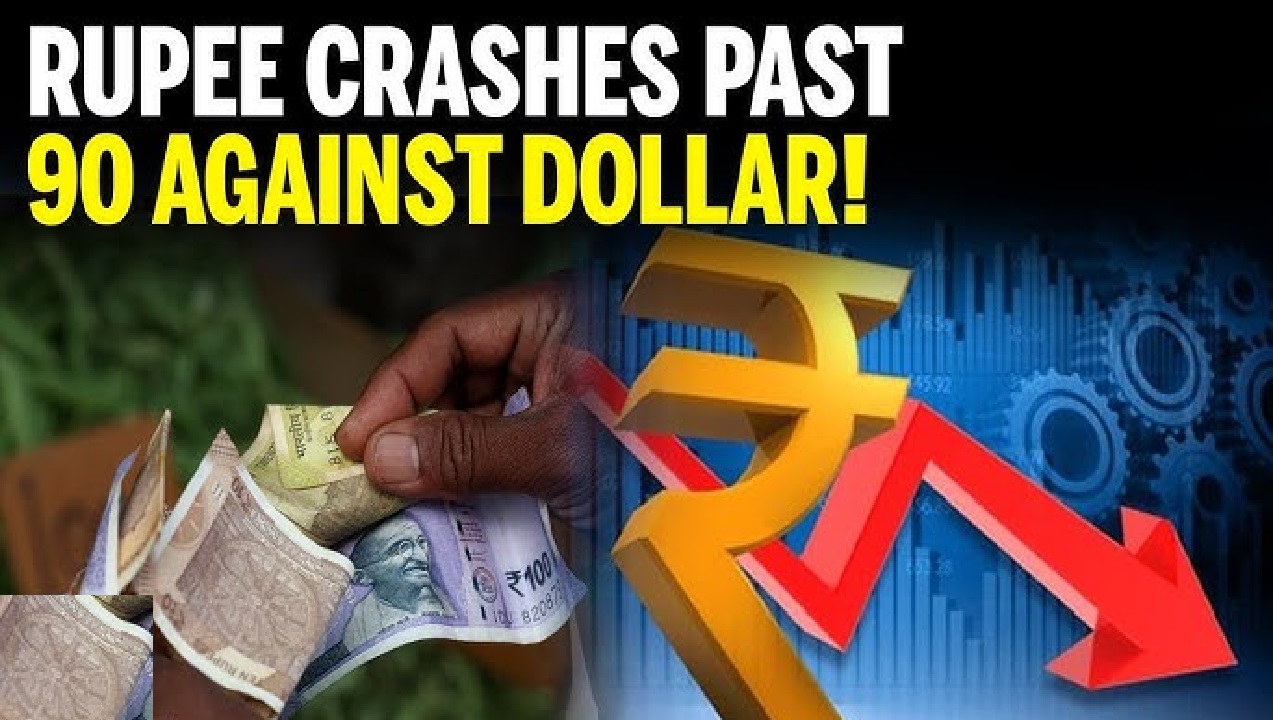
A Record Low That Signals Rising Risk
The rupee’s fall to an all-time low of 90.13 per US dollar marks more than a routine currency adjustment—it reflects a convergence of trade uncertainty, tariff pressure and weakening capital flows. What began as a slow drift through 2025 has turned into a sharper, India-specific slide, underscoring how vulnerable the currency has become to the unresolved India–US trade negotiations and Washington’s tariff actions. A rebound is still possible, analysts say, but only if the long-promised trade deal lands with credible tariff relief.
Why the Rupee Is Sliding
Three intertwined forces are driving the depreciation:
1. US Tariff Shock
Washington’s imposition of a 25% base tariff on a broad range of Indian exports—along with hints of further penalties related to Russian oil purchases and defence engagements—has darkened India’s export outlook. Sectors like textiles, gems, leather and chemicals face margin erosion, while demand uncertainty weighs on forward orders.
2. Trade-Deal Delays
Markets had priced in at least a partial India–US trade agreement by fall 2025. Repeated postponements, vague assurances and the absence of detail on tariff exemptions have unnerved currency traders. With officials still promising a deal “this month” but no text available for scrutiny, traders have positioned themselves defensively.
3. Capital Outflows and Fundamentals
Foreign portfolio investors (FPIs) have withdrawn billions from equities and debt as tariff uncertainty mounts. A widening trade deficit, combined with strong importer demand for dollars, has left the rupee structurally exposed. Importantly, the rupee has weakened far more than its Asian peers even as the dollar index softens—evidence that this is an India-centric stress episode.
How US Tariffs Specifically Hit the Rupee
The US tariff escalation affects the rupee through two channels:
Trade Channel – Weak Exports, Higher Dollar Demand
Tariffs of 25–50% on a large basket of exports threaten nearly half of India’s USD 80–90 billion shipments to the US. As US buyers delay or cut orders, exporter dollar inflows decline. Meanwhile, India still needs dollars to pay for oil, electronics and capital goods. The imbalance deepens current-account pressures and forces the rupee lower.
The hit to export margins has led analysts to trim GDP forecasts by 0.3–0.5 percentage points, reinforcing a weaker-growth narrative that typically pulls currencies down.
Finance Channel – Investor Sentiment and Outflows
Tariff escalation has triggered a sentiment shock. FPIs have become sustained net sellers, pulling out ₹1–1.3 lakh crore in 2025. Since the tariff announcement, the rupee has become “one of Asia’s most susceptible currencies,” with USD 11–12 billion in equity and debt outflows.
This creates a feedback loop: fewer exports → fewer dollar inflows → more hedging and outflows → weaker rupee → higher import costs → more investor anxiety.
What Markets Are Now Watching
Design of the Trade Deal:
A growth-friendly deal with tariff carve-outs could revive FPI sentiment, trigger short-covering on speculative dollar longs and push the rupee back into the high-80s.
Tariff and Russia-Linked Clauses:
Any agreement that locks in high tariffs or penalises India’s Russian linkages could cement a structurally weaker rupee.
RBI’s Intervention Strategy:
The Reserve Bank is smoothing volatility but not defending any specific level. Markets are watching whether RBI intensifies dollar sales around or beyond 90 to signal discomfort.
Stability Hinges on One Variable
The rupee’s plunge to 90.13 is not merely a market overreaction—it is a rational repricing of risk in a world where India–US trade terms remain uncertain and tariff exposure is rising. A credible trade deal with moderate tariff terms could restore confidence and stabilise flows, enabling at least a partial recovery. Without it, the rupee enters a regime where depreciation becomes self-reinforcing, capital outflows persist and India’s macro-buffers are tested more frequently. The currency’s path from here is inseparable from the geopolitics of trade—and the clock is ticking.
(With agency inputs)