A Historic Naval Milestone: INS Arnala to be Commissioned at Visakhapatnam on June 18
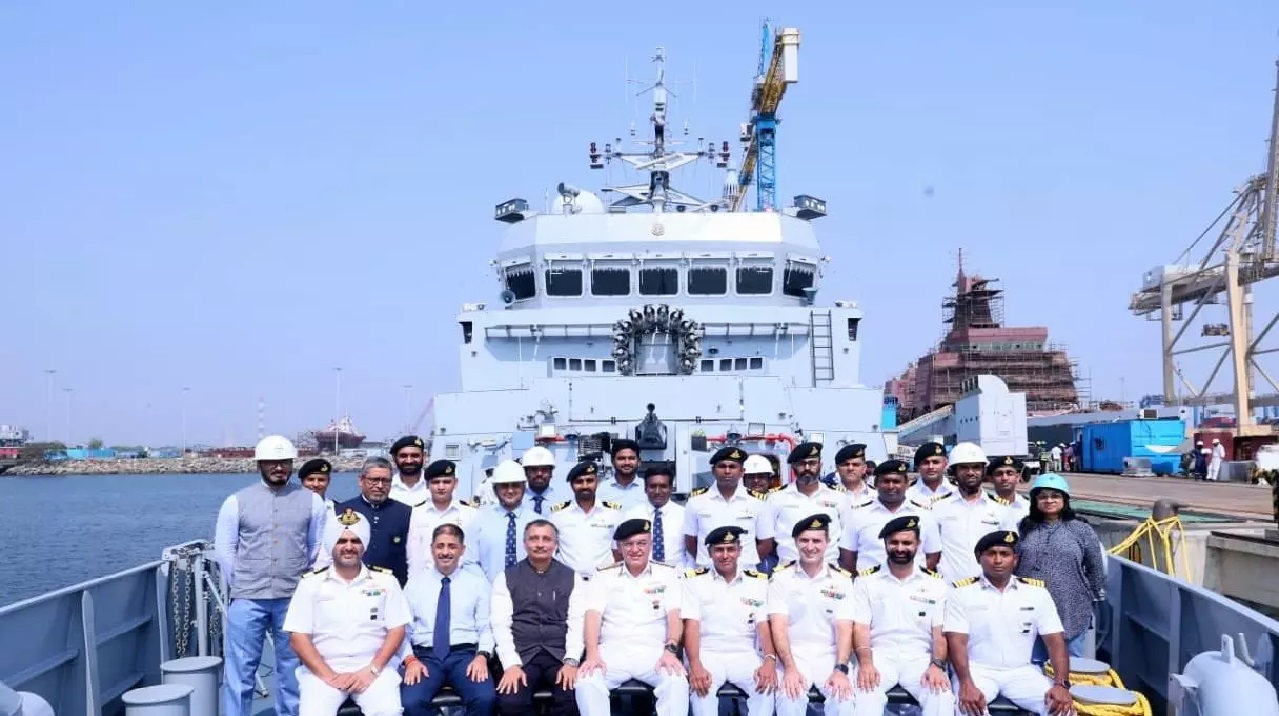
In a landmark moment for India’s maritime capabilities, the Indian Navy is poised to commission its first homegrown Anti-Submarine Warfare Shallow Water Craft (ASW-SWC)—INS Arnala—on June 18 at the Naval Dockyard in Visakhapatnam. This induction marks a major stride in India’s push toward indigenous defence production under the Aatmanirbhar Bharat initiative.
Built by Garden Reach Shipbuilders and Engineers (GRSE), Kolkata, in collaboration with L&T Shipbuilders, INS Arnala is the first of 16 such vessels being developed under a Public-Private Partnership (PPP) model. Delivered to the Navy on May 8, the ship stands as a testament to India’s growing naval self-sufficiency and technological capability.
Over 80% of Components Sourced Locally; MSMEs Play a Key Role
INS Arnala is over 80% indigenous, a rare feat in warship manufacturing. Major Indian defence firms like Bharat Electronics Limited (BEL), L&T, Mahindra Defence, and MEIL have contributed to critical onboard systems. More notably, 55 Micro, Small, and Medium Enterprises (MSMEs) across the country have participated in its development—strengthening the defence manufacturing ecosystem and creating valuable industrial synergy.
This level of local involvement is not only a nationalistic milestone but also an economically strategic move, ensuring cost-efficiency, domestic job creation, and reduced dependency on foreign suppliers.
Designed for Coastal Defence and Precision Submarine Warfare
At 77 metres in length and weighing over 1,490 tonnes, INS Arnala may appear compact, but it’s built for stealth, agility, and lethal precision. Powered by a Diesel Engine-Waterjet propulsion system, the vessel is engineered for shallow water operations—ideal for the subcontinental coastal landscape.
Its mission scope includes:
· Anti-submarine warfare in shallow waters
· Subsurface surveillance
· Search and rescue missions
· Low-intensity maritime operations
Its design enables it to navigate close to shorelines where conventional warships may not function optimally—plugging a critical gap in India’s maritime security net.
Legacy, Symbolism, and Operational Spirit
Named after the historic Arnala Fort off Vasai, Maharashtra—built by the Marathas in 1737—the ship reflects India’s rich naval heritage. The ship’s crest features a stylised Auger Shell, symbolizing resilience, vigilance, and supremacy in harsh marine conditions. Its motto, “Arnave Shauryam” (Valour in the Ocean), captures its operational spirit and mirrors the bravery of India’s naval warriors.
The symbolism isn’t mere aesthetics—it reinforces the message that this vessel stands ready to dominate shallow coastal waters just as its namesake fort once defended the mainland.
Expanding Coastal Defence, Reducing Foreign Dependence
INS Arnala’s commissioning is just the beginning. With 15 more vessels of the same class to follow, the Indian Navy is on track to significantly boost its coastal defence capabilities. These ships will serve as a first line of defence against submarine threats in vulnerable shallow waters, especially along India’s eastern and western seaboards.
This bolsters a broader naval strategy, complementing larger destroyers, frigates, and the INS Vikrant aircraft carrier—and ensures layered maritime security from the deep sea to the shoreline.
Moreover, by making these ships at home, India avoids the high costs and geopolitical risks of importing critical naval assets. It is a strategic autonomy multiplier.
A Compact Powerhouse for a Self-Reliant Navy
With the commissioning of INS Arnala, India enters a new phase of naval preparedness—one where indigenous innovation meets operational necessity. As tensions in the Indo-Pacific rise and maritime threats become more complex, having a fleet of shallow water ASW crafts like Arnala ensures that India’s coastal borders remain secure, agile, and ever-vigilant.
This isn’t just a ship—it’s a symbol of India’s maritime resilience, self-reliance, and forward-looking defence posture.
(With agency inputs)