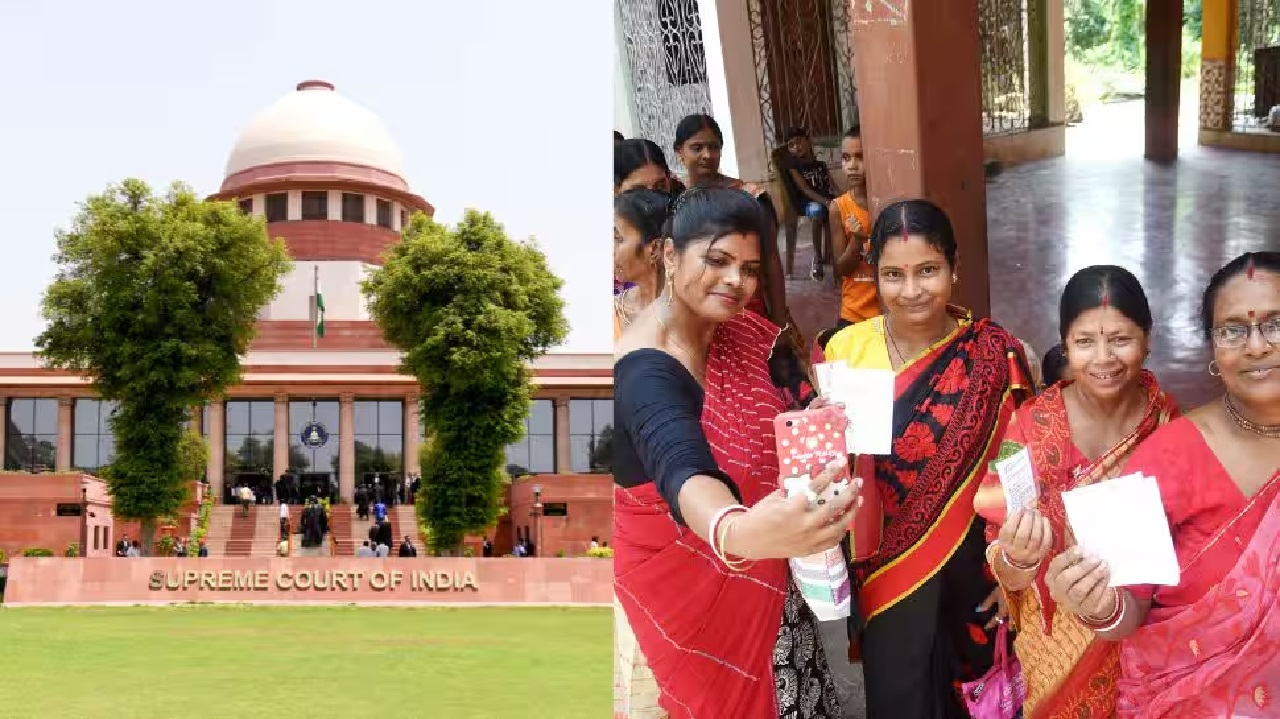
The Supreme Court of India has refused to grant interim voting rights to lakhs of residents in West Bengal whose names were deleted from electoral rolls during a massive revision exercise. The decision comes just days before polling, placing the Court at the centre of a delicate balance between protecting voter rights and preserving the integrity of the election process.
Massive Roll Revision and Exclusions
The controversy stems from the Special Intensive Revision (SIR) of electoral rolls ahead of the 2026 Assembly elections. The exercise involved scrutiny of over 60 lakh claims and objections, resulting in the exclusion of more than 20 lakh names.
An additional 30–34 lakh voters remain in limbo, with their appeals still pending before appellate tribunals. Petitioners have alleged arbitrary deletions, procedural lapses, and possible political bias, warning that a significant number of eligible voters risk disenfranchisement.
The Election Commission of India froze the rolls for the first phase on April 9, following established legal norms that restrict changes once the election schedule is announced. This created a direct conflict between unresolved appeals and the statutory requirement to finalise voter lists before polling.
Court’s Dilemma: Protecting Rights Without Disrupting Elections
A bench led by Chief Justice Surya Kant acknowledged that the right to vote—and to remain on electoral rolls—is both constitutional and deeply significant. However, the Court declined to order blanket interim inclusion of deleted voters.
The judges emphasised that forcing tribunals to resolve millions of appeals within days could overwhelm the system and disrupt election preparations. At the same time, granting provisional voting rights without verification could undermine the credibility of the electoral process.
Instead, the Court has sought a middle path, reinforcing existing legal mechanisms rather than introducing emergency measures.
Legal Framework: Remedies Within the System
The Court highlighted that once an appeal is decided, electoral authorities must promptly update the rolls. It also pointed to the potential use of Article 142 powers to ensure justice in individual cases.
This approach reflects a preference for strengthening institutional processes rather than bypassing them. By doing so, the Court aims to preserve both procedural fairness and administrative feasibility.
Election Commission’s Stand: Stability Over Last-Minute Changes
The Election Commission has argued that electoral roll revision and election conduct operate under distinct legal frameworks. Once elections are notified, large-scale changes to voter lists are restricted to prevent confusion and allegations of manipulation.
Allowing widespread last-minute additions, the Commission contends, could create operational chaos at polling booths and undermine trust in the system.
Concerns over law and order have also been raised, particularly in sensitive areas where tensions over voter exclusions could escalate into unrest.
Analytical View: A Tightrope Walk
The Court’s decision reflects a careful balancing act between three competing risks. First, the risk of disenfranchisement if genuine voters are excluded. Second, the risk of administrative breakdown if tribunals are overwhelmed. Third, the risk to electoral legitimacy if established procedures are bypassed.
By refusing interim relief while emphasising the ongoing nature of voter rights, the Court signals that the issue extends beyond a single election cycle. It underscores the need for systemic reforms, including better verification processes, stronger appellate mechanisms, and improved transparency.
A Pragmatic but Imperfect Resolution
The Supreme Court’s stance may not satisfy all stakeholders, particularly those facing exclusion from the rolls. However, it reflects a pragmatic attempt to safeguard the broader electoral framework while leaving room for corrective action.
In the long run, the episode highlights the urgent need to modernise and strengthen India’s electoral processes. Ensuring that every eligible voter is included—without compromising the integrity of elections—remains a challenge that requires sustained institutional reform beyond the courtroom.
(With agency inputs)