A Timely Move Before a High-Profile Visit
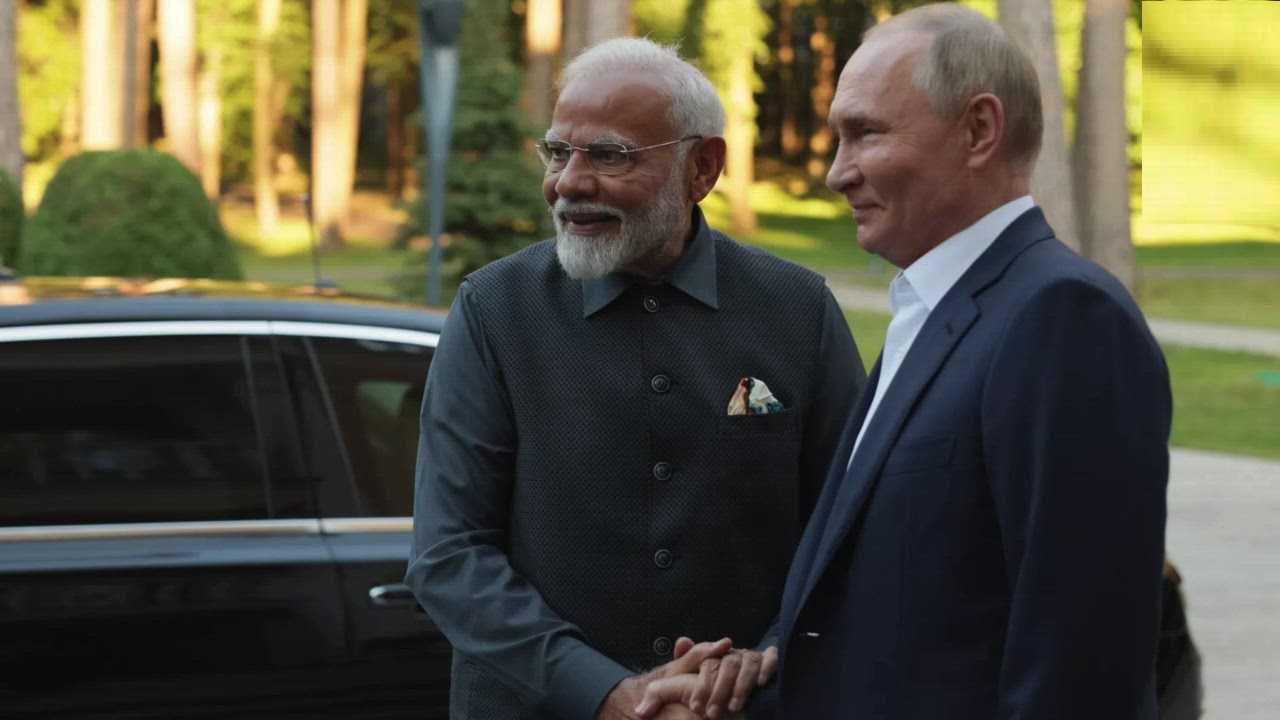
Russia’s formal clearance of the Reciprocal Exchange of Logistic Support (RELOS) agreement with India—finalised just ahead of President Vladimir Putin’s visit to New Delhi—cements a logistics framework that significantly upgrades bilateral military cooperation. The timing is deliberate: it signals that despite Western sanctions and political pressure, Moscow and New Delhi are prepared to institutionalise long-term strategic interdependence. The State Duma’s ratification process, now underway, brings into force a pact signed in February 2025 that grants both nations predictable, assured access to each other’s military infrastructure.
What RELOS Actually Does
RELOS establishes a standing logistics-sharing mechanism that allows Indian and Russian forces to use each other’s bases, ports and airfields for refuelling, berthing, maintenance, restocking and repairs. Unlike past ad-hoc arrangements, it creates a smooth administrative and financial settlement system, aligning Russia with the logistics pacts India already maintains with the US, France, Japan, Australia and others. Once operational, it will streamline military exercises, crisis deployments and humanitarian missions while reducing time, cost and bureaucratic friction.
Why It Matters for India
RELOS fills a major gap in India’s global logistics access architecture. Its advantages include:
· Operational Reach into the Arctic and NSR: Access to Russian ports from Murmansk to Vladivostok extends India’s naval footprint into high-latitude waters at a time when the Northern Sea Route and Arctic resources are gaining strategic relevance.
· Support for India’s Arctic Engagement: With stakes in Yamal and Arctic LNG-2 and an observer role in the Arctic Council, India gains dependable logistics support for naval operations and scientific missions in a region where infrastructure is scarce.
· Logistical Ease for Russian-Origin Platforms: The Indian military continues to rely heavily on Russian equipment—from Talwar-class frigates to Su-30 MKI fighters—making Russian facilities advantageous for spares, specialised servicing and deployment support.
· Faster, Cheaper Joint Operations: Exercises like INDRA, or potential Arctic drills, benefit from simplified logistics. In crises—evacuations or HADR missions—Russian bases offer redundancy and flexibility.
Why It Matters for Russia
For Moscow, RELOS is a foothold in the Indian Ocean. It provides Russian naval vessels and aircraft access to India’s extensive base network—critical as Russia diversifies maritime activity beyond Europe and the Pacific.
The pact also fits neatly into Russia’s “pivot to Asia.” It demonstrates that Moscow’s Asian strategy is not exclusively China-centric and that India remains a privileged partner even as Russia deepens defence ties with China and North Korea. Enhanced port calls, joint missions and easier deployments help reinforce Russia’s claim to be a long-term security actor in the Indian Ocean.
Western Reactions: Pressure Without a Breakpoint—Yet
RELOS does not violate existing sanctions. However, it symbolically strengthens an India–Russia alignment that Western governments are trying to constrain. The likely consequences include:
· Sharper Political Scrutiny: US and EU observers are already warning of deeper India–Russia defence and energy integration, particularly given India’s heavy reliance on discounted Russian oil and ongoing discussions on additional S-400 units or even Su-57 interest.
· Secondary Sanctions Risk: More than a third of India’s crude imports originate from Russia, much from already-sanctioned firms. Washington’s expanding secondary sanctions regime could target Indian refiners, shippers or banks dealing with blacklisted entities—especially if Russia–India Arctic cooperation intensifies post-RELOS.
· CAATSA-Style Defence Pressures: While major sanctions on India remain improbable, targeted measures—including technology restrictions or entity-specific designations—are feasible should India proceed with major new Russian hardware programmes.
· Tariffs and Technology Controls: With the US already imposing new tariffs on select Indian exports, RELOS may reinforce Western arguments for tighter trade and technology filters as a low-risk signalling tool.
Strategic Autonomy Meets Strategic Cost
RELOS by itself will not trigger a sanctions crisis. But it undeniably tightens the web of operational and logistical interdependence between India and Russia at a moment when Washington and its allies are expanding sanctions and monitoring networks far beyond Europe. The pact enhances India’s Arctic and Indo-Pacific reach while bolstering Russia’s Indian Ocean presence—yet it also raises India’s exposure to Western financial and technology coercion. New Delhi’s challenge now is to balance deepening ties with Moscow without compromising access to Western markets, capital and advanced technologies. Managing that trade-off will define the real strategic cost of RELOS.
(With agency inputs)