


A Major Operational Breakthrough
Navi Mumbai International Airport (NMIA) has reached a defining milestone by completing its first full-scale integrated passenger trial under the Operational Readiness and Airport Transfer (ORAT) framework—confirming readiness for commercial launch on December 25, 2025. The rigorous simulation involved hundreds of trial passengers navigating real-world airport processes with IndiGo, Akasa Air, and Air India Express, from check-in and security to boarding and baggage reclaim. This ORAT validation ensures that systems, equipment, workflows, and personnel operate cohesively as per international aviation standards. For a greenfield project of NMIA’s scale, this smooth transition from construction to live operations significantly reduces operational risks.
Launch Day and Initial Operations
Jointly developed by Adani Airports Holdings Limited (74%) and CIDCO (26%), NMIA will begin services on December 25 with IndiGo flight 6E460 from Bengaluru at 8:00 AM. Initial operations (8 AM–8 PM) will include 23 departures daily to 16 cities, supported by IndiGo, Akasa Air, and Air India Express. Up to 10 aircraft movements per hour are planned until January 31, 2026.
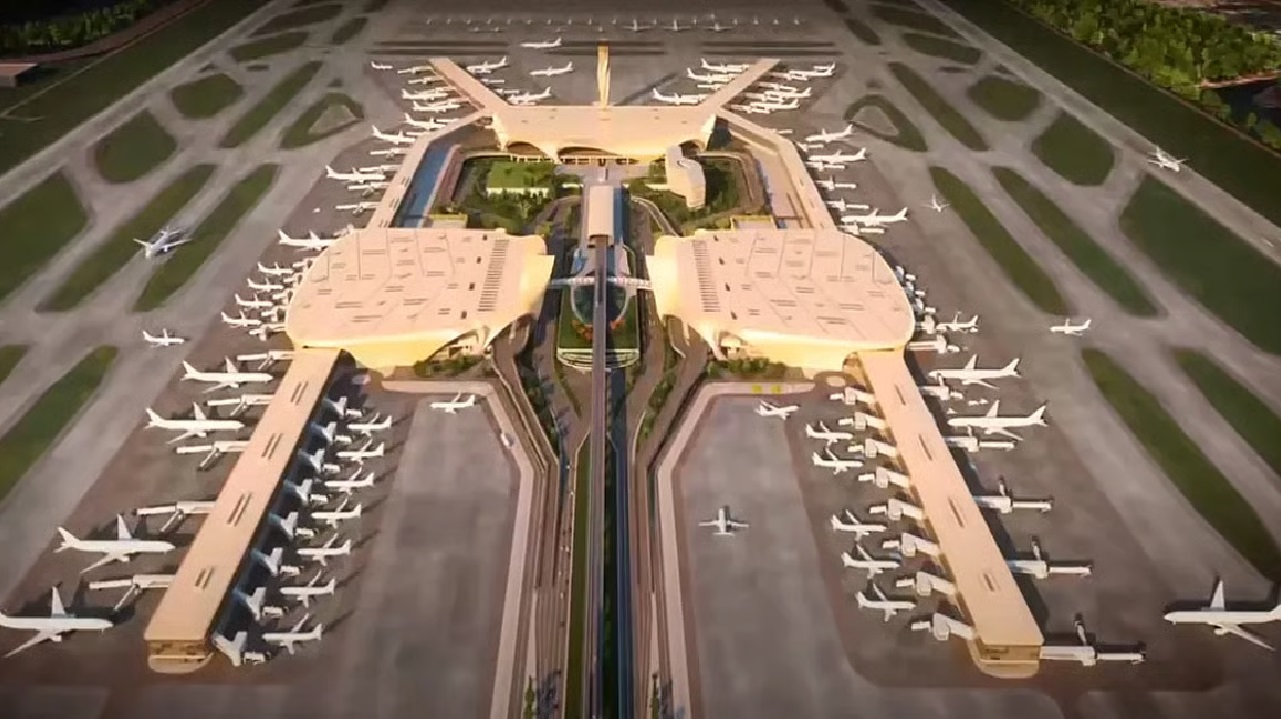
The airport’s long-term blueprint includes four runways, multi-terminal capacity, and 0.5 million metric tonnes of annual cargo handling, designed to ease Mumbai’s long-standing congestion and strengthen regional connectivity. At full scale, NMIA is projected to handle 90 million passengers annually, emerging as one of the world’s largest aviation hubs.
Security Preparedness: CISF Takes Control
The Central Industrial Security Force (CISF) assumed charge of NMIA on October 29, 2025, making it the 71st airport under its Aviation Security Group. An initial 900 personnel are deployed across access control, pre-embarkation checks, perimeter patrol, cargo screening, Quick Reaction Teams, Bomb Detection Squads, and K9 units. This will scale to a sanctioned 1,800–1,840 personnel as traffic increases. The CISF’s phased induction, coupled with joint contingency planning with local police, ensures a secure operational environment from day one.
Passenger Amenities: A Modern, Seamless Experience
NMIA’s design prioritizes comfort, speed, and technological integration:
· 66 check-in counters and 22 self-service baggage drop stations
· Digi Yatra–enabled e-gates for contactless authentication
· One of the world’s fastest baggage claim systems
· Premium lounges, multi-cuisine food courts with gate delivery, and vibrant retail zones
· Kids’ play areas, short-stay transit hotels, and accessible infrastructure
· 5G connectivity, free Wi-Fi, charging points, and real-time queue displays
Together, these amenities position NMIA among India’s most passenger-centric airports from day one.
Transport Links: A Multimodal Access Network
NMIA’s connectivity plan is engineered to serve the Mumbai Metropolitan Region’s 20+ million residents:
Road Connectivity
A dedicated airport access road from the Sion-Panvel Highway ensures swift entry, supported by intelligent traffic systems, upgraded arterial roads, and multi-level parking. Airport express buses linking Pune, Thane, Dadar, Vashi, and Panvel are planned to extend reach.
Rail and Metro Links
· Panvel station functions as the primary suburban and intercity rail hub.
· Elevated connectors to Khandeshwar (Harbour Line) and Targhar (Nerul-Uran Line) will shorten travel time.
· Future metro lines—Line 5, Line 12, and the crucial inter-airport Line 8 (CSMIA–NMIA)—aim to connect western, central, and Navi Mumbai suburbs within 30–40 minutes.
These multimodal links are critical for NMIA’s early capacity target of 10 million passengers annually, while supporting long-term scalability.
A Strategic Lift for India’s Aviation Future
The completion of NMIA’s ORAT exercise and its readiness for December 25 operations mark a major leap in India’s aviation infrastructure. With advanced amenities, robust security, and integrated transport networks, the airport is poised to relieve Mumbai’s saturation, boost regional economic activity, and enhance passenger experience. Though initial operations are limited in scale, NMIA’s phased expansion sets the foundation for a transformative shift— positioning the airport as a future global hub and a catalyst for India’s next era of aviation growth.
(With agency inputs)