


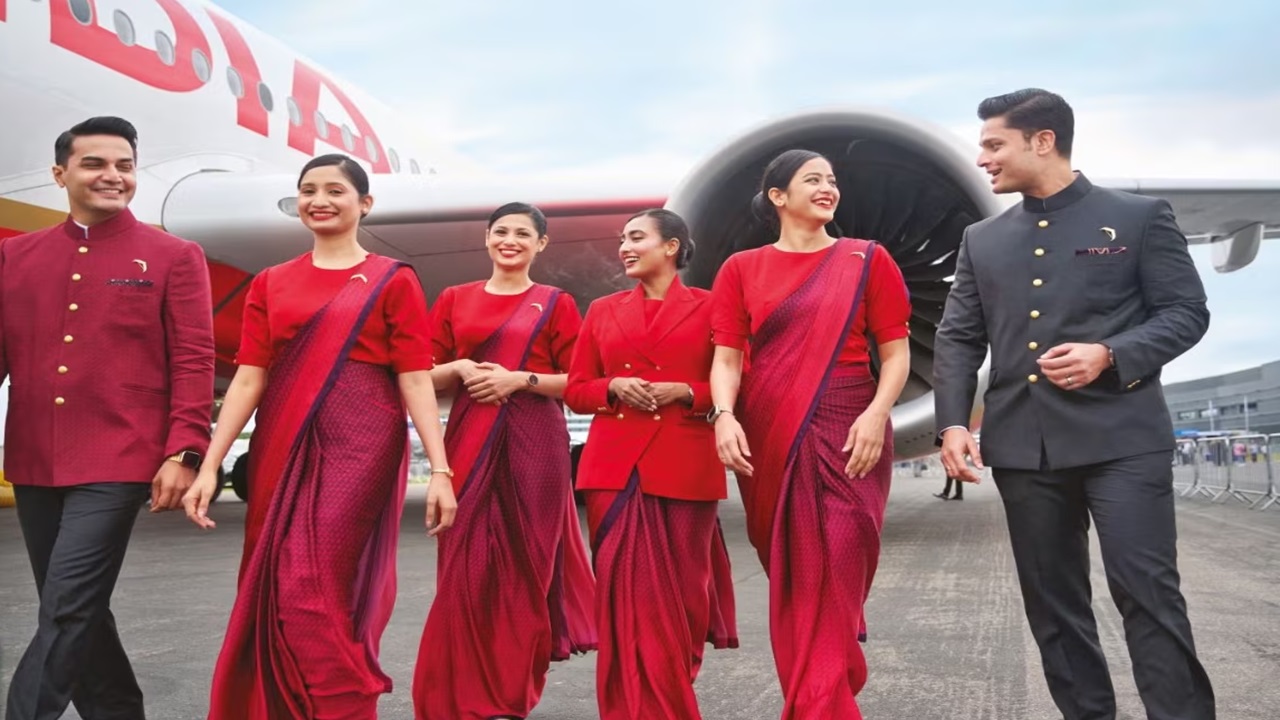
Days after Lenskart sparked controversy over its workplace policies, Air India has landed in a similar storm. The airline is facing backlash after its internal grooming guidelines—circulating widely on social media—appeared to object to symbols such as sindoor, chooda, and mangalsutra worn by cabin crew. The episode has reignited a broader debate on corporate dress codes, cultural identity, and perceived bias.
The Viral Manual: What Triggered the Outrage
The controversy began when screenshots, purportedly from Air India’s cabin crew handbook, surfaced online. These excerpts suggested strict grooming norms that disallowed visible religious and marital symbols, including mangalsutra, chooda, and even sindoor or tikka on the forehead.
Social media reactions were swift and intense, with many users accusing the airline of insensitivity toward cultural practices. The timing amplified the outrage, as it came shortly after the Lenskart controversy, leading many to interpret the issue as part of a larger pattern within corporate India.
Air India’s Response: “Outdated and Not in Use”
In response to the backlash, Air India stated that the circulated document was from an older manual no longer in use. The airline emphasised that current policies allow employees to wear bindis and that grooming guidelines have been revised since the Tata Group takeover to align with international standards. However, the explanation has raised a critical question—if the manual is “outdated,” it also implies there was a time when such restrictions were actively enforced, prompting many to ask why such rules existed in the first place. The clarification, while addressing part of the concern, did not fully respond to all items mentioned in the viral excerpts, such as mangalsutra or religious threads, leaving the debate unresolved.
The Lenskart Precedent: A Pattern or Coincidence?
The Air India episode closely follows Lenskart’s own dress-code controversy, where a leaked document appeared to restrict traditional symbols like bindis and kalawa while allowing attire such as hijabs under certain conditions. The backlash forced Lenskart’s CEO Peyush Bansal to clarify that the document was outdated and to introduce revised guidelines explicitly permitting cultural and religious markers.
This sequence has shaped public perception, with many viewing Air India’s case not as an isolated incident but as part of a recurring issue—where companies cite “old documents” only after public scrutiny.
The Core Debate: Uniformity vs Cultural Expression
At the heart of the controversy lies a fundamental tension. Supporters of strict grooming rules argue that industries like aviation rely on uniformity and neutrality to maintain a professional global image. Limiting visible symbols, they say, helps create a standardised brand identity.
Critics, however, contend that such neutrality often translates into cultural erasure, particularly in a country like India where symbols like sindoor or mangalsutra carry deep social and personal significance. They argue that policies framed in a “global” template can inadvertently reflect bias if not carefully adapted to local contexts.
A Wake-Up Call for Corporate Policy
The Air India grooming row underscores a growing challenge for Indian corporates—balancing global standards with cultural sensitivity. While the airline’s clarification may ease immediate concerns, the broader issue remains unresolved.
Together with the Lenskart episode, this controversy signals a need for companies to proactively review internal policies, ensure equitable treatment of all cultural expressions, and communicate guidelines transparently. In an era of heightened public scrutiny, relying on outdated manuals is no longer tenable. The real test for corporates lies in creating workplaces that are both professional and inclusive—without forcing employees to leave their identities at the door.
(With agency inputs)