


The Race for Fifth-Gen Supremacy
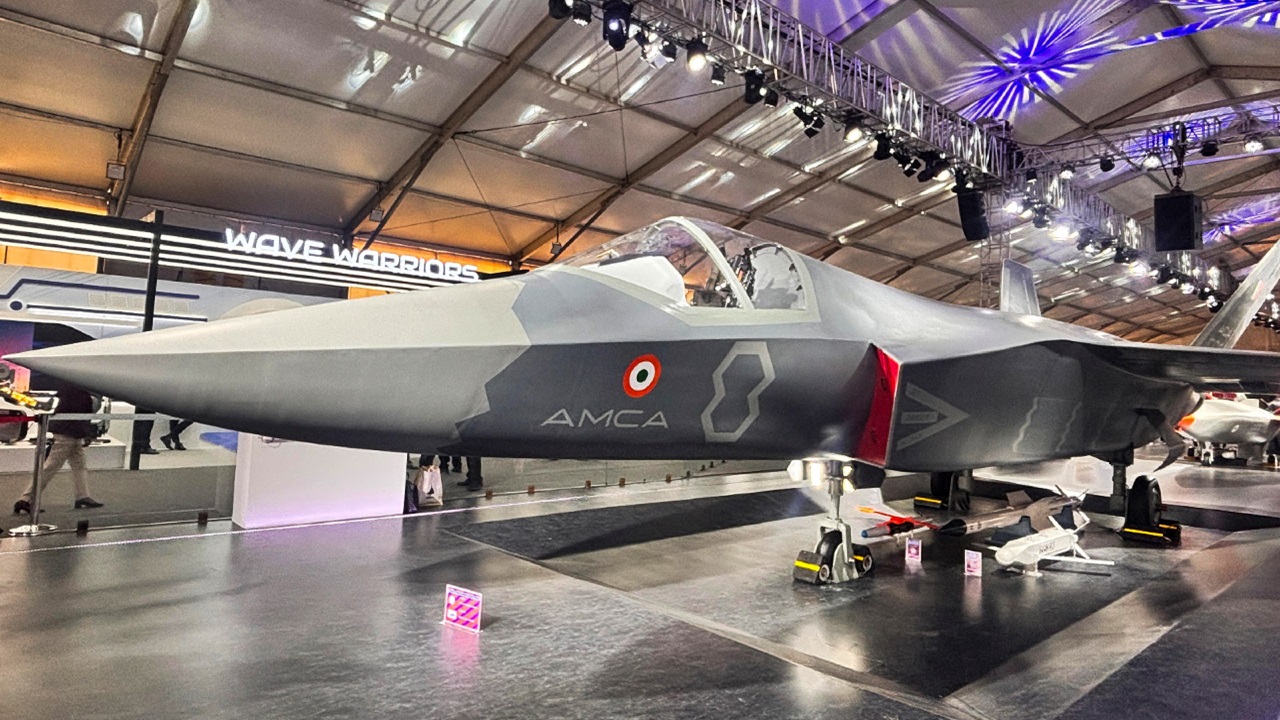
The fifth-generation fighter jet is the pinnacle of modern military aviation—defined by stealth, advanced avionics, and software-driven combat superiority. Nations that field such aircraft sit in a very exclusive club, led by the United States, Russia, and China. Now, India is charting its own path with the Advanced Medium Combat Aircraft (AMCA), a flagship project of the Defence Research and Development Organisation (DRDO). Recently, the programme entered a critical stage as multiple domestic firms lined up to co-develop the first prototypes of this stealth platform.
The Bidding Battle
With the Expression of Interest (EoI) deadline closing on September 30, at least seven major Indian defence companies have thrown their hat in the ring. Names include Larsen & Toubro, Hindustan Aeronautics Limited (HAL), Tata Advanced Systems, Adani Defence, and Kalyani Strategic Systems. This demonstrates both the depth and breadth of India’s private sector readiness to invest in cutting-edge aerospace engineering.
The bids will be reviewed by a high-powered panel chaired by former BrahMos Aerospace chief A. Sivathanu Pillai. After evaluation, only two firms will be shortlisted. Together, they will receive around ₹15,000 crore to design and build five prototypes, a vital step before production rights are finalized.
Ministry’s Final Call
While the technical committee will provide recommendations, the ultimate authority rests with the Ministry of Defence. The ministry has been closely monitoring AMCA’s progress ever since the Cabinet Committee on Security approved the ambitious plan last year. Defence Secretary-level oversight ensures that deadlines and developmental milestones remain on track, given the strategic importance of the project.
Inside the AMCA Design
The AMCA is envisioned as a single-seat, twin-engine, stealth-enabled jet designed for multirole combat. Like its international counterparts—the F-22 Raptor, F-35 Lightning II, and Russia’s Su-57—it will feature stealth coatings, internal weapons bays, and advanced avionics.
The aircraft is expected to soar to an altitude of 55,000 feet and carry 1,500 kg of ordnance internally, supported by 5,500 kg on external pylons if stealth is not a priority. With an additional 6,500 kg of onboard fuel, it promises both endurance and firepower. Over 125 jets are planned, forming part of a broader ₹2 lakh crore modernization package. Induction, however, is projected only after 2035.
What Makes a Jet ‘Fifth-Generation’?
While there is no universal checklist, fifth-gen fighters generally combine stealth shaping, sensor fusion, powerful engines, and electronic warfare capabilities. The real differentiator is the digital backbone: software ecosystems that give pilots unparalleled awareness of the battlespace, linking multiple assets in real time. This edge can often determine outcomes before a missile is even fired.
India’s Strategic Push
The AMCA project reflects India’s larger drive to upgrade its armed forces amidst persistent tensions with Pakistan and China. Recent defence procurements reinforce this push—such as the ₹63,000 crore agreement to buy 26 Rafale-M fighters for the Navy, supplementing the Air Force’s fleet of 36 Rafale-Cs. Parallel advances include an indigenously built aircraft carrier, next-generation warships, submarines, and progress in hypersonic missile technology.
Defence Minister Rajnath Singh has further pledged contracts worth $100 billion for domestic arms manufacturing by 2033, aiming not only to reduce dependence on imports but also to fuel defence exports.
Building More Than a Jet
The AMCA is more than just an aircraft—it is a statement of intent. By developing an indigenous fifth-generation platform, India seeks technological sovereignty in a domain traditionally dominated by superpowers. The road to 2035 will be long, demanding consistent funding, technical breakthroughs, and timely execution. Yet if successful, the AMCA will not only transform India’s air combat capabilities but also mark its entry into the elite circle of stealth fighter producers.
(With agency inputs)