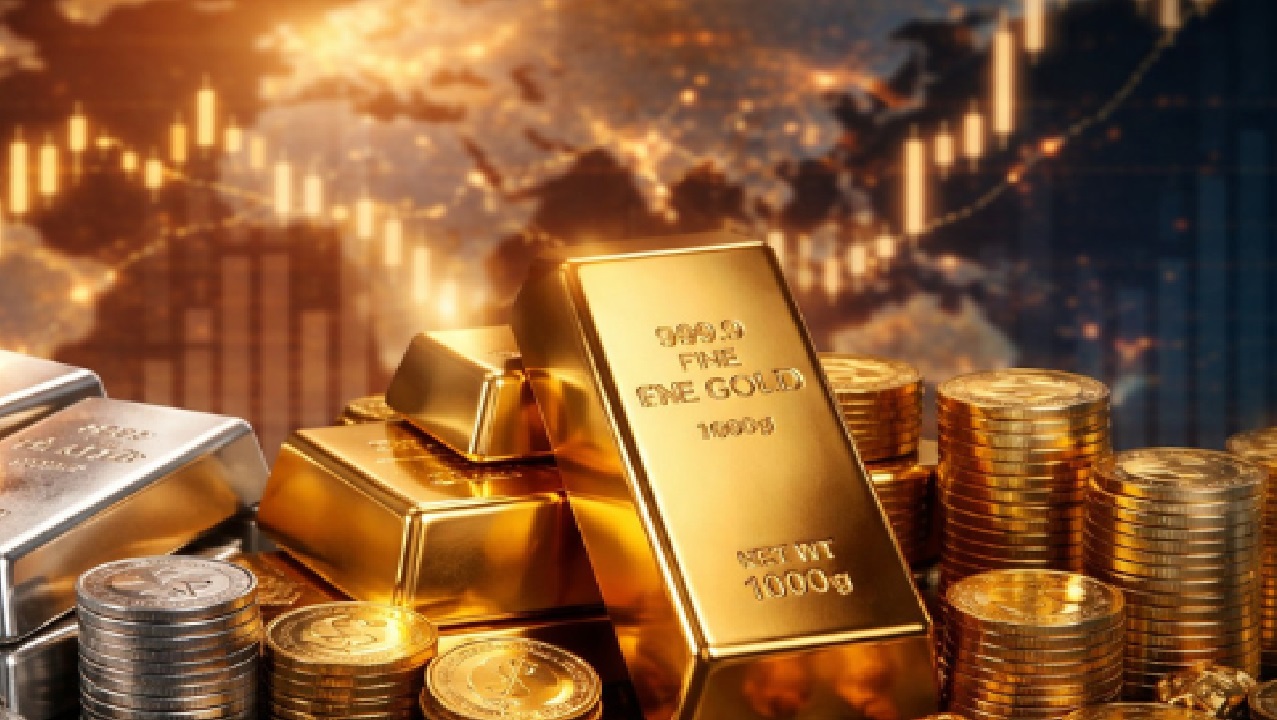
Gold is at its weakest level this year, dropping nearly 5% as rising bets on interest rate hikes reshape market sentiment. What was once a preferred safe-haven asset is now under pressure, as investors pivot in response to inflation fears driven by escalating tensions in West Asia and the prospect of tighter monetary policy in the United States.
A Sharp Correction in Precious Metals
The recent decline in gold prices marks a significant shift in market dynamics. Spot gold has fallen repeatedly over multiple sessions, recording its worst weekly performance in decades and trading near $4,569 per ounce. Technical indicators such as the Relative Strength Index (RSI) suggest oversold conditions, yet the downward momentum remains intact.
The weakness is not isolated. Silver and platinum have also registered steep losses, reflecting a broader sell-off across the precious metals complex. Exchange-traded funds (ETFs) linked to gold have witnessed consistent outflows, with holdings declining notably as investors move capital toward higher-yielding assets.
This retreat underscores a fundamental change: gold’s traditional appeal as a hedge against uncertainty is being overshadowed by macroeconomic forces that favor liquidity and returns.
Rate Hike Bets Reshape Investor Behavior
At the core of this shift lies a dramatic reversal in expectations surrounding US monetary policy. Markets that had earlier anticipated rate cuts are now pricing in potential rate hikes, driven largely by inflationary pressures linked to rising oil prices.
Short-term US bond yields have surged, with two-year yields climbing above previous policy thresholds and longer-duration yields also trending upward. This increase in real yields directly impacts gold, a non-yielding asset, by raising its opportunity cost. Simply put, as returns on interest-bearing instruments rise, gold becomes less attractive.
The strengthening US dollar further compounds the pressure. Since gold is globally priced in dollars, a stronger currency makes it more expensive for international buyers, dampening demand and accelerating the decline.
Geopolitical Tensions Add Complexity
Ironically, the same geopolitical tensions that would typically support gold are now contributing to its fall. The West Asia conflict has driven oil prices higher, intensifying global inflation concerns. This, in turn, has prompted central banks—particularly the US Federal Reserve—to adopt a more hawkish stance.
Iran’s escalating threats against regional energy infrastructure and the partial disruption of key oil transit routes have amplified these concerns. While such instability would usually boost safe-haven demand, the overriding narrative has shifted toward inflation control and monetary tightening.
This interplay between geopolitics and policy has created a paradox: heightened global risk is not lifting gold, but instead reinforcing conditions that suppress it.
Implications for India and Global Markets
For India, one of the largest consumers of gold, the price decline introduces both opportunities and risks. Lower prices could stimulate retail demand, particularly during festive and wedding seasons. However, volatility remains a concern, especially as domestic prices mirror global swings.
In broader markets, the correction in gold signals a recalibration of investor priorities. Capital is increasingly flowing toward assets that benefit from higher interest rates, including bonds and equities, leaving traditional hedges under pressure.
A Market in Transition
Gold’s recent price highlights a critical transition in global financial markets. The metal’s decline is not merely a reaction to short-term factors but a reflection of deeper structural shifts driven by inflation, interest rates, and geopolitical uncertainty.
While future movements will depend on how these forces evolve, one thing is clear: gold’s role as a safe haven is being redefined. In a world where policy responses to inflation take precedence, the metal must navigate a more complex landscape—one where stability alone is no longer enough to sustain its shine.
(With agency inputs)