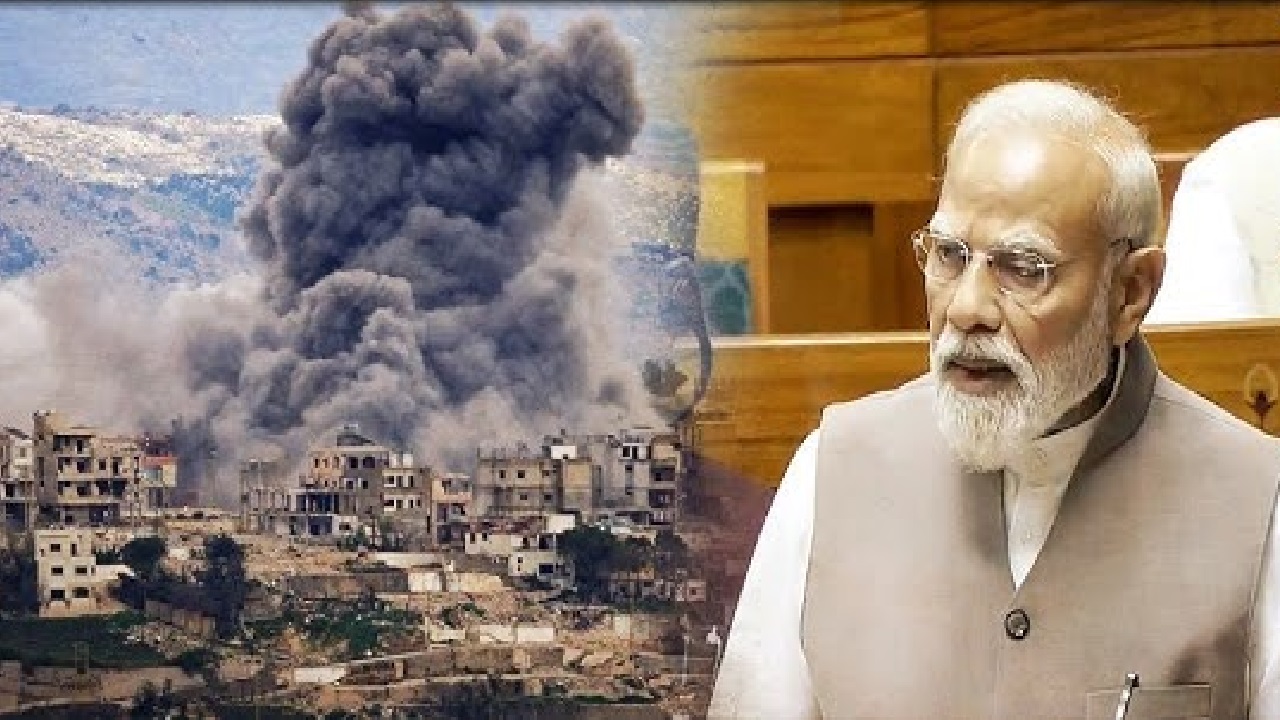
Prime Minister Narendra Modi expressed deep concern over the escalating crisis in West Asia, addressing Parliament with a focus on its far-reaching implications for India’s security, economy, and global positioning. His remarks reflected both urgency and reassurance, as the government steps up efforts to navigate the uncertainties arising from the intensifying conflict.
A Call for Restraint and Diplomacy
Framing the situation as a “grave concern,” Modi reiterated India’s consistent stance in favor of dialogue and diplomacy over military escalation. He emphasized the importance of respecting sovereignty and territorial integrity, underlining that sustainable peace in West Asia can only emerge through negotiated solutions.
India’s approach, he noted, is rooted in strategic balance. With deep ties across the region—including Israel, Gulf nations, and Iran—New Delhi is carefully engaging all stakeholders while advocating de-escalation. The Prime Minister also referenced ongoing high-level monitoring, including deliberations by the Cabinet Committee on Security, which is tracking developments such as airstrikes, regional retaliation, and disruptions to global energy flows.
Protecting Citizens and Critical Supply Chains
A key priority highlighted in the address was the safety of Indian nationals in the region. With millions of Indians living and working across West Asia, the government has intensified contingency planning. Measures include evacuation readiness, strengthened consular services, and close coordination with host countries to ensure rapid response in case of emergencies.
Beyond citizen safety, Modi placed strong emphasis on safeguarding India’s economic lifelines. The government has activated a “whole-of-government” strategy, bringing together multiple ministries to monitor vulnerabilities in oil, gas, shipping, and trade. The objective is clear: maintain uninterrupted access to essential commodities and shield domestic markets from global price shocks.
This coordinated approach reflects lessons from past crises, where supply chain disruptions quickly translated into inflationary pressures. By acting early, the government aims to minimize the impact on households and businesses alike.
Economic Preparedness in a Volatile World
Modi positioned India as entering this period of global instability from a position of relative strength. He pointed to steady economic growth, controlled inflation, and progress toward long-term development goals as key buffers against external shocks.
However, he acknowledged that rising oil prices and financial market volatility present real challenges. The government, in coordination with the Reserve Bank of India, is working to balance growth with stability. Tools such as strategic reserves, diversified energy sourcing, and targeted policy interventions are being deployed to manage risks.
The broader message was one of resilience: while global situation may be uncertain, India’s economic framework is designed to absorb shocks without derailing its trajectory.
Strategic Signalling and Global Role
Modi’s address also carried important geopolitical messaging. By emphasizing diplomacy, strategic autonomy, and proactive engagement, he positioned India as a responsible and influential player on the global stage.
At a time of heightened great-power tensions, India’s ability to maintain relationships across competing blocs enhances its role as a stabilizing force. The Prime Minister’s remarks reinforced the idea of India as a leading voice for the Global South, advocating peace while protecting its own national interests.
Preparedness as Policy
The West Asia crisis presents a complex mix of risks, from energy disruptions to geopolitical uncertainty. Modi’s address makes clear that India is not merely reacting but actively preparing—through diplomacy, economic planning, and institutional coordination.
In an interconnected world, distant conflicts can quickly become domestic challenges. India’s response, therefore, is anchored in vigilance and adaptability. As the situation evolves, the country’s ability to stay prepared while pursuing long-term growth will define how effectively it weathers this global storm.
(With agency inputs)