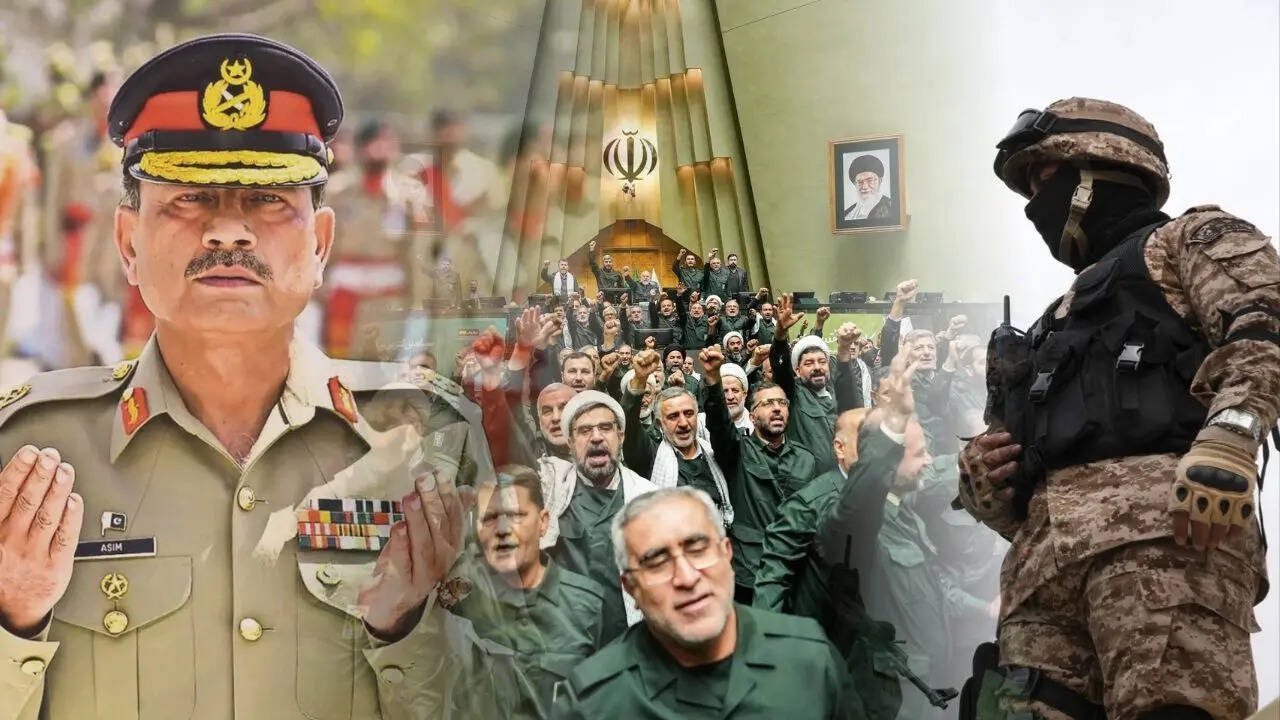
Pakistani Army Chief Asim Munir’s warning that “Shias can go to Iran” has ignited a sharp backlash from Pakistani clerics, triggering a wider debate over identity, loyalty, and the state’s handling of sectarian sensitivities. The remark, reportedly made during an interaction with Shia ulema, has not only drawn criticism from religious leaders but also exposed deeper tensions within Pakistan’s political and strategic framework.
The Remark and Its Immediate Context
The controversy stems from an Iftar meeting in Rawalpindi, where Munir addressed Shia scholars amid rising unrest linked to the ongoing West Asia conflict. Protests had erupted across Pakistan following the killing of Iran’s Supreme Leader in US–Israel strikes, with incidents targeting foreign diplomatic interests and clashes near sensitive zones.
During the exchange, Munir reportedly cautioned against domestic violence triggered by external events. However, when challenged by a cleric, his response took a sharper tone, suggesting that those who “love Iran” should consider leaving Pakistan. While the military’s official statement later framed the meeting as a discussion on national unity and security, it conspicuously omitted any reference to the controversial comment.
Clerical Backlash and Identity Assertion
The response from Shia clerics was swift and critical. Religious leaders accused the military establishment of undermining the community’s legitimacy and equating political expression with disloyalty. Many argued that expressing solidarity with Iran or criticizing global powers should not be construed as a challenge to Pakistan’s sovereignty.
Clerics also invoked historical and constitutional arguments, emphasizing that Shias have been integral to Pakistan’s founding and development. By highlighting the religious identity of the country’s founder and the contributions of Shia citizens across sectors, they pushed back against narratives that question their place within the national fabric.
The backlash has also taken a political tone, with accusations that the military is aligning too closely with Western and Gulf interests while suppressing dissenting voices at home.
Intersecting Fault Lines: Sectarian, Strategic, Political
The episode brings into focus three overlapping tensions.
· First is the sectarian divide within a Sunni-majority nation, where Shias form a significant minority but have historically faced marginalisation. Munir’s remark risks reinforcing perceptions of exclusion at a time of heightened regional sensitivities.
· Second is Pakistan’s evolving foreign policy. Islamabad’s recent alignment with Gulf countries and its critical stance on Iran’s actions have raised questions about its balancing strategy. For many within the Shia community, this shift appears inconsistent with broader claims of Islamic solidarity.
· Third is the enduring debate over the military’s dominant role in Pakistan’s political system. Critics argue that such statements reflect a broader pattern where security considerations overshadow inclusive governance and civil discourse.
Fallout and Strategic Implications
The absence of an official clarification or apology has allowed the controversy to deepen. Shia leaders have framed the issue as part of a larger struggle for recognition and respect, warning that such rhetoric could exacerbate sectarian divisions.
At a strategic level, the incident complicates Pakistan’s already delicate diplomatic balancing act between Iran, Gulf states, and Western powers. As tensions in West Asia intensify, maintaining internal cohesion becomes even more critical for Islamabad.
A Test of Unity and Statecraft
Munir’s remark has evolved from a moment of rhetoric into a broader reflection of Pakistan’s internal and external challenges. It underscores how quickly geopolitical tensions can intersect with domestic fault lines, amplifying divisions.
Moving forward, the key challenge for Pakistan will be to manage these sensitivities with care—ensuring that national security concerns do not come at the cost of social cohesion. In a volatile regional environment, unity at home may prove to be the country’s most important strategic asset.
(With agency inputs)