



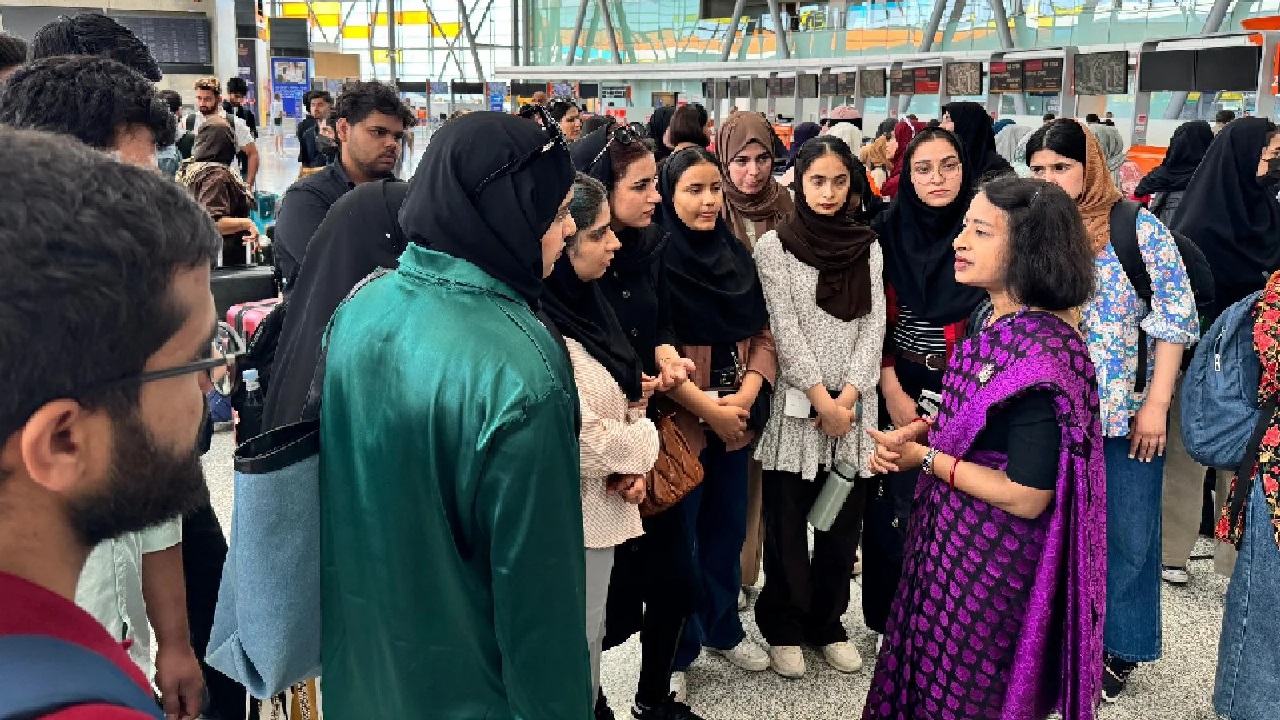
The Indian Embassy in Tehran has issued a strong advisory urging Indian nationals to “expeditiously exit” Iran, emphasizing the need for swift and coordinated departures. Citizens have been asked to use designated routes and remain in close contact with embassy officials to avoid confusion or risk at border crossings. This warning comes at a critical juncture, as a temporary lull in hostilities has created a narrow but vital opportunity for evacuation. The message is clear: delay could significantly increase danger if the conflict intensifies again.
A Carefully Timed ‘Safe Window’ Strategy
India’s evacuation effort is built around what officials describe as a “safe window”—a brief period during which active bombing has subsided enough to allow overland movement. While the broader region, including the Strait of Hormuz, remains tense, the absence of sustained strikes inside Iran has enabled ground routes to stay operational.
The Ministry of External Affairs (MEA) has calibrated its advisory accordingly. After initially asking citizens to “stay put” for 48 hours, authorities quickly pivoted to encourage early departure as conditions stabilized. However, the government has also cautioned against uncoordinated movement, stressing that individuals should not approach border crossings without prior clearance from the embassy. This reflects a strategy that balances urgency with controlled execution.
Tracking the Numbers: Who Remains at Risk
Estimating the number of Indians still in Iran has proven complex. While earlier figures ranged between 9,000 and 10,000, more recent assessments suggest that approximately 7,500 nationals remain in the country. This population is fluid, comprising largely students, pilgrims, and professionals rather than long-term residents.
Encouragingly, over 1,700 Indians have already been evacuated in recent weeks, highlighting both the scale and effectiveness of the ongoing operation. Students, in particular, have formed a significant portion of those evacuated, given their heightened vulnerability in volatile conditions.
Overland Corridors and On-Ground Coordination
India’s evacuation plan relies heavily on land routes, particularly from southern cities like Bandar Abbas and northern transit hubs leading toward Armenia and Azerbaijan. These corridors, spanning up to 1,500 kilometers, remain viable due to careful coordination with local authorities and neighboring countries.
To support the process, the MEA has deployed consular teams at key border points and transit airports. These teams assist evacuees with documentation, logistics, and onward travel, often arranging special or commercial flights to bring them home. The Embassy in Tehran has also established multiple helplines, urging nationals to register their details and align their travel plans with official guidance. This structured approach minimizes chaos and ensures safer passage.
Balancing Speed with Safety
India’s evacuation doctrine reflects a nuanced understanding of the risks. Acting too slowly could trap citizens if hostilities resume, while acting too hastily without coordination could expose them to logistical or security challenges. By leveraging real-time intelligence and maintaining tight operational control, the government is attempting to navigate this delicate balance.
A Narrow Window, A Critical Mission
India’s response to the evolving crisis in Iran underscores the importance of timing, coordination, and adaptability in emergency evacuations. The current “safe window” offers a crucial opportunity to move citizens out of harm’s way, but it is inherently fragile. As geopolitical tensions remain unresolved, the success of this operation will depend on how quickly and efficiently nationals heed the advisory. In a rapidly shifting conflict landscape, proactive action today may be the difference between safe return and heightened risk tomorrow.
(With agency inputs)