


Trump’s NATO Outburst Over Iran Signals Deepening Alliance Rift
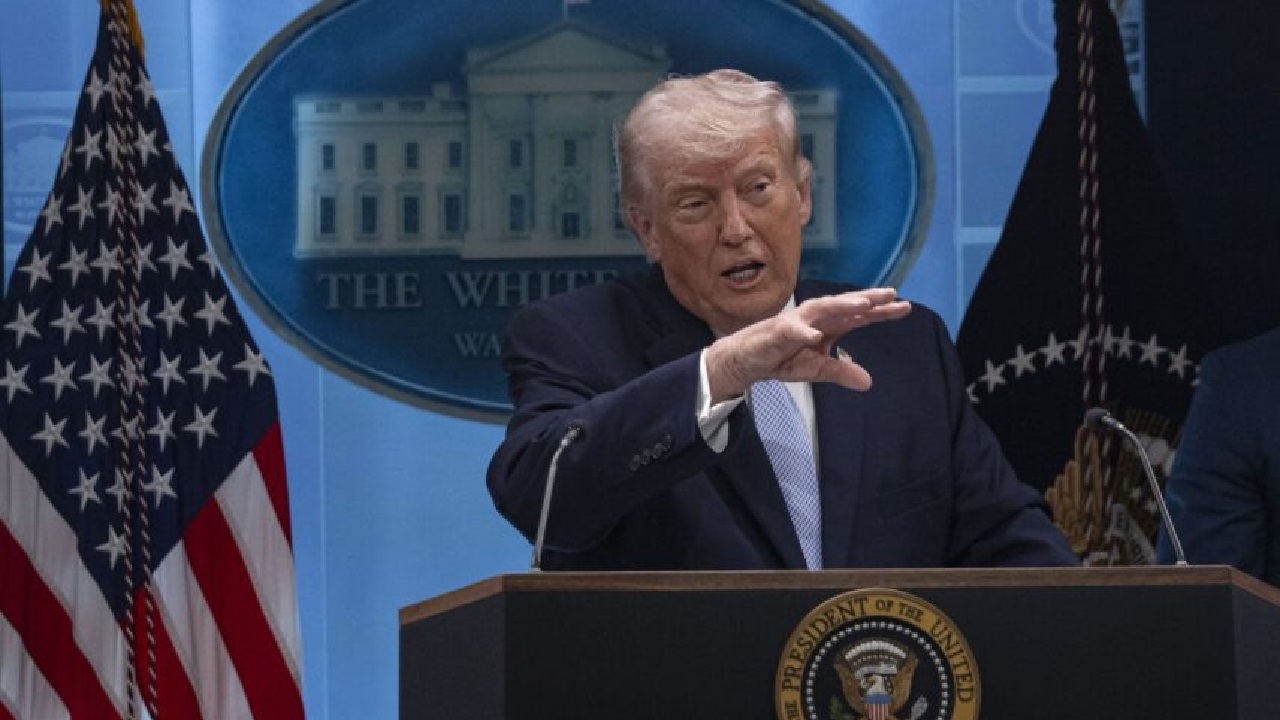
In a sharp escalation of rhetoric, US President Donald Trump openly criticised NATO during a meeting with its Secretary-General Mark Rutte, blaming the alliance for failing to support US actions during the Iran conflict. In a controversial remark, Trump even invoked Greenland, calling it a “big, poorly run, piece of ice,” using the comment to underline broader frustrations with European allies. The episode highlights not just a moment of tension, but a deeper fracture in transatlantic relations.
Iran War Exposes NATO’s Internal Divisions
The immediate trigger for Trump’s criticism lies in the recent Iran conflict, particularly during Operation Epic Fury. Several key European NATO members, including France and Spain, refused to provide military support or allow operational access to their airspace for US-led actions.
From Washington’s perspective, this amounted to a lack of solidarity within the alliance. Trump argued that countries benefiting from stable Gulf energy supplies should share the burden of securing them. However, NATO’s official stance differs: the alliance is not obligated to support unilateral military campaigns that fall outside collective defence commitments.
This divergence has exposed a long-standing ambiguity—whether NATO should act as a global security instrument aligned with US strategy, or remain focused on its original defensive mandate.
Burden-Sharing and Strategic Autonomy
Trump’s remarks revive a familiar theme: burden-sharing within NATO. For years, he has criticised European allies for relying too heavily on US military and financial support. The Iran episode has intensified this debate, with the US questioning why it should continue underwriting European security if allies hesitate to support American-led operations abroad.
On the other hand, European nations have increasingly emphasised strategic autonomy—the idea that they should not be compelled to follow US foreign policy decisions, particularly in volatile regions like the Middle East. This clash of expectations is now at the core of the alliance’s internal tensions.
Greenland and Geopolitics: A Strategic Linkage
Trump’s reference to Greenland was not merely rhetorical. By linking the Arctic territory to NATO’s perceived shortcomings, he signalled a broader geopolitical strategy. The message appears to be that US security commitments—whether in Europe or the Arctic—are conditional on greater alignment with American priorities.
This introduces a more transactional dimension to the alliance. For European leaders, such linkage is concerning, as it shifts NATO’s foundation from shared defence principles to negotiated, interest-based arrangements. It also raises questions about how far the US might go in leveraging its strategic assets to extract concessions from allies.
Rutte’s Balancing Act and the Future of NATO
Amid these tensions, Mark Rutte has attempted to play a stabilising role. Publicly, he has emphasised unity and acknowledged contributions from most European members, while privately working to ease friction between Washington and its allies.
However, the damage may already be significant. The Iran crisis has added to existing disagreements over defence spending, regional conflicts, and NATO’s evolving role. These cumulative strains risk transforming the alliance into a looser, more conditional partnership.
A Turning Point for Transatlantic Unity
Trump’s latest outburst underscores a critical moment for NATO. What began as a dispute over Iran has evolved into a broader questioning of the alliance’s purpose, cohesion, and future direction.
If unresolved, these tensions could redefine transatlantic relations—shifting NATO from a unified security bloc to a more fragmented and transactional arrangement. The challenge ahead lies in reconciling differing strategic visions while preserving the core principles that have sustained the alliance for decades.
(With agency inputs)