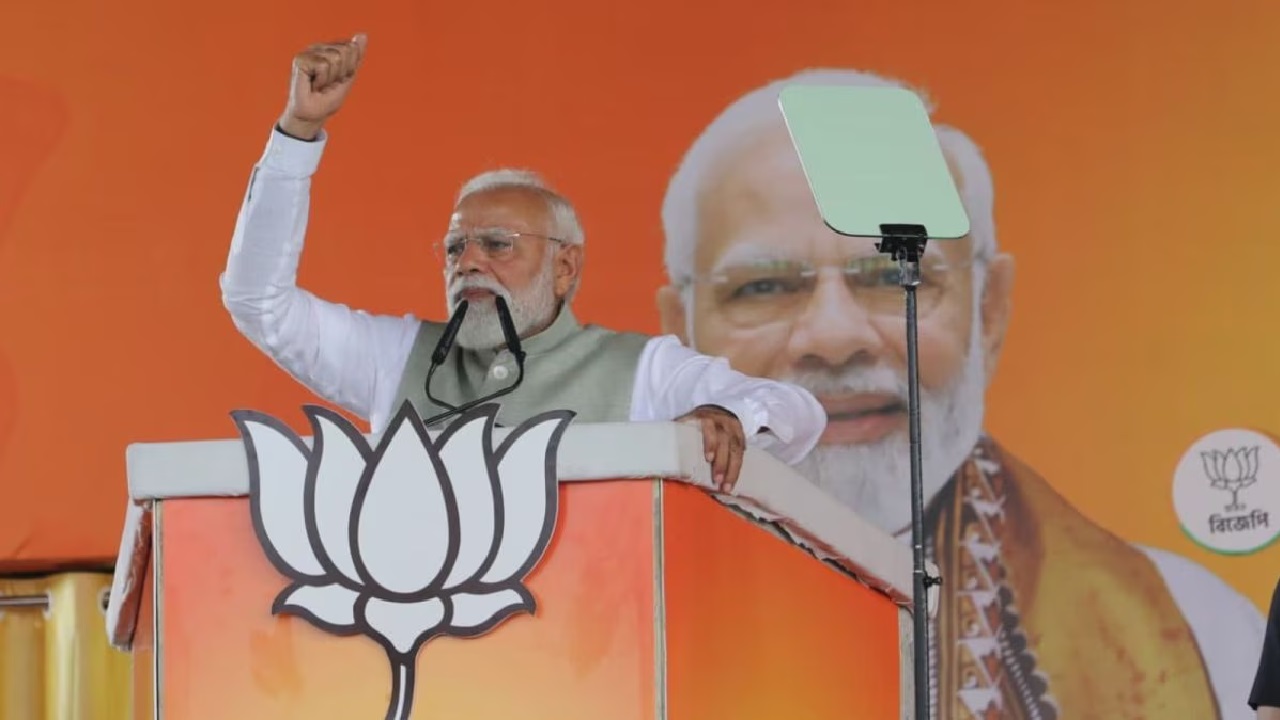
Prime Minister Narendra Modi has sharpened his political pitch in West Bengal, promising jobs, improved safety, and an end to the rule of the All-India Trinamool Congress. Framing the upcoming electoral battle as a choice between continuity and change, Modi unveiled a set of “six guarantees” designed to position the BJP as a governance-driven alternative to Chief Minister Mamata Banerjee’s administration.
The Core Promise: Pay Commission as Political Leverage
At the heart of Modi’s proposal lies the implementation of the 7th Pay Commission for state government employees—a long-standing demand in Bengal. By pledging to address salary disparities and delayed revisions, the BJP is targeting a significant and influential voter base: government employees and their families.
This promise is more than a financial commitment; it is being framed as a symbol of administrative fairness and efficiency. By contrasting it with the current system, the BJP is attempting to turn a technical policy issue into a broader critique of governance under the Trinamool Congress.
Governance Reset: Transparency and Anti-Corruption Push
A major pillar of the six guarantees revolves around governance reform. Modi’s messaging emphasises transparency, accountability, and a crackdown on corruption. The promise to reopen alleged cases of corruption and crimes against women signals a strong law-and-order narrative aimed at voters dissatisfied with the current administration.
This approach is designed to appeal not only to the general electorate but also to businesses and investors who prioritise stable and rule-based governance. By projecting a stricter legal framework, the BJP is positioning itself as a party capable of restoring institutional trust in the state.
The “Double-Engine” Model: Centre-State Synergy
Central to Modi’s pitch is the idea of a “double-engine” government—where alignment between the state and the central government accelerates development. The BJP argues that such synergy would ensure smoother implementation of welfare schemes and reduce inefficiencies.
This narrative directly challenges the Trinamool Congress’s claim of effective welfare delivery. By promising better coordination and faster execution, the BJP is attempting to convince voters that development outcomes would improve under its leadership.
Infrastructure as the Growth Engine
Infrastructure development forms the backbone of the six guarantees. Projects like the proposed Kharagpur–Moregram economic corridor, along with expanded investments in roads, railways, and ports, are being highlighted as catalysts for economic growth.
These initiatives aim to reposition West Bengal as a competitive destination for manufacturing and trade. By shifting focus toward large-scale development, the BJP is also attempting to move beyond earlier confrontational rhetoric and present a more constructive, growth-oriented vision for the state.
A High-Stakes Political and Policy Gamble
Modi’s six guarantees represent a carefully crafted blend of welfare promises, governance reform, and economic ambition. The strategy seeks to erode the Trinamool Congress’s core support base while projecting the BJP as both a cleaner and more development-focused alternative.
However, the success of this approach will depend on how voters weigh promises against past performance and regional political realities. As West Bengal moves closer to its electoral verdict, the contest is shaping up not just as a political battle, but as a referendum on competing models of governance and development.
(With agency inputs)