A River Crossed, A Region Transformed
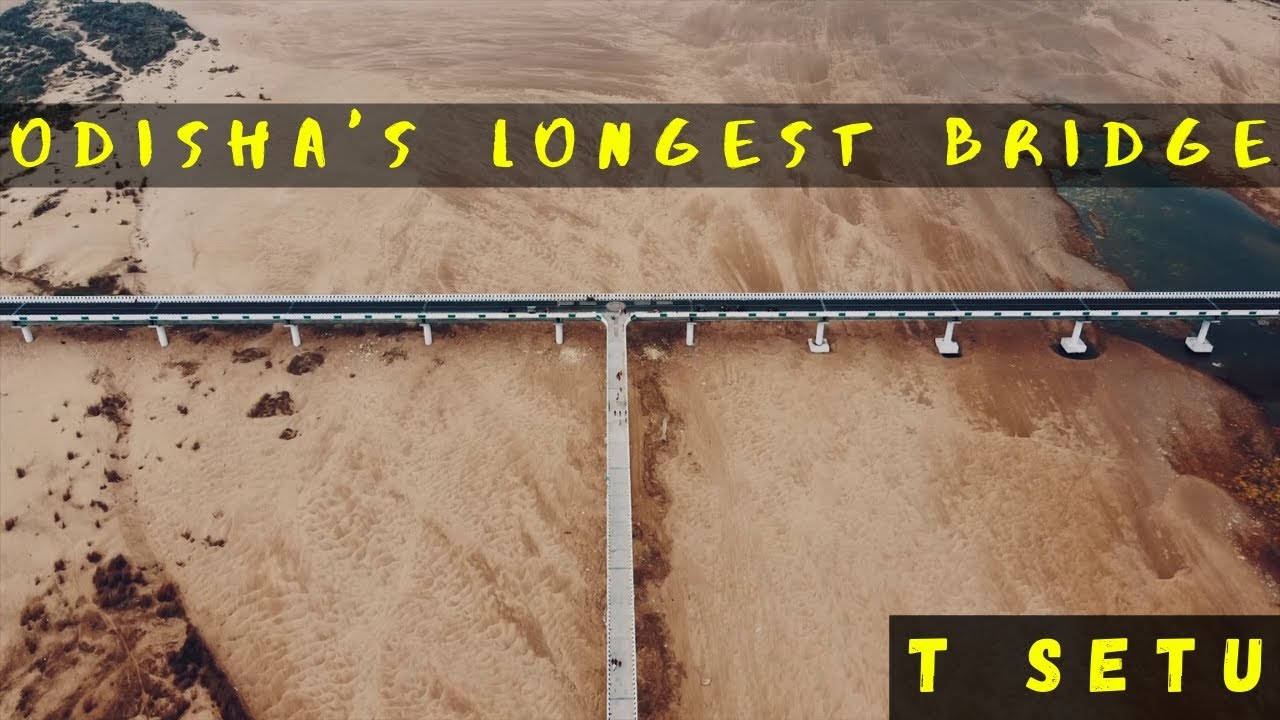
In December 2021, Odisha witnessed a landmark moment in its infrastructure journey with the inauguration of the T-Setu Bridge over the mighty Mahanadi River. Spanning 3.4 kilometers in Cuttack district, this engineering marvel is not just the state’s longest bridge but also a symbol of connectivity, resilience, and socio-economic progress.
Named for its unique T-shaped alignment, the bridge links Gopinathpur, Baideswar, and the sacred pilgrimage site of Singhanath Pitha. Beyond its striking design, T-Setu has reduced travel by up to 45 kilometers for over half a million people, bringing distant communities closer than ever before.
T-Setu: Strength in Design, Depth in Impact
Built at a cost of ₹111 crore, the T-Setu features a 7.5-meter-wide road and pedestrian pathways, supported by deeply anchored piers designed to resist monsoon-induced currents. Its construction—using high-strength concrete and tensioned steel—ensures longevity against the twin pressures of nature and daily traffic.
The project replaced an unreliable temporary riverbed road that had to be reconstructed annually at significant cost, only to be washed away each monsoon. Since its completion, T-Setu has not only enhanced transportation efficiency but also supported agriculture, local trade, and religious tourism, particularly during the vibrant Bali Makar Jatra festival.
By seamlessly linking the Cuttack and Khordha districts, the bridge has become a vital corridor for farmers, traders, and pilgrims alike, exemplifying how targeted infrastructure can uplift regional economies.
A New Era Begins: The Rise of the Hirakud Reservoir Bridge
However, Odisha’s record-setting bridge is soon set to pass on its legacy. On April 17, 2025, Union Road Transport Minister Nitin Gadkari laid the foundation stone for what will become the state’s longest bridge—a 4-km structure across the Hirakud Dam reservoir.
With a projected cost of ₹275 crore and a timeline of 2.5 years, the bridge will link Lakhanpur in Jharsuguda with Ambabhona in Bargarh, slashing travel distance between Sambalpur and Bargarh from 100 km to just 12 km.
Funded by the Central Road and Infrastructure Fund, the bridge aims to restore continuity to a region historically divided by the construction of the Hirakud Dam in the 1950s. That project, while transformative for irrigation and power, also displaced communities and fractured traditional social and economic ties.
Healing Divides, Fueling Progress
More than a transportation upgrade, the new bridge is poised to reconnect long-separated communities across western Odisha and even facilitate smoother links with neighboring Chhattisgarh. For villages that have long struggled with geographic isolation, this development promises newfound access to education, healthcare, markets, and job opportunities.
Freight movement will also benefit, with shorter routes increasing logistical efficiency and boosting trade across districts. In a region still catching up with the rest of the state in terms of connectivity, the Hirakud bridge is a strategic game-changer.
Infrastructure as a Bridge to the Future
As T-Setu gracefully relinquishes its title, it leaves behind more than just a record—it marks a turning point in Odisha’s developmental arc. The upcoming Hirakud reservoir bridge exemplifies the state’s growing commitment to inclusive infrastructure, capable of uniting people, markets, and opportunities.
Together, these monumental bridges are not just concrete and steel—they are powerful statements of intent, building not only roads, but a stronger, more connected future for all of Odisha.
(With inputs from agencies)