

Mission Akash Ganga: A New Dawn for India’s Space Odyssey
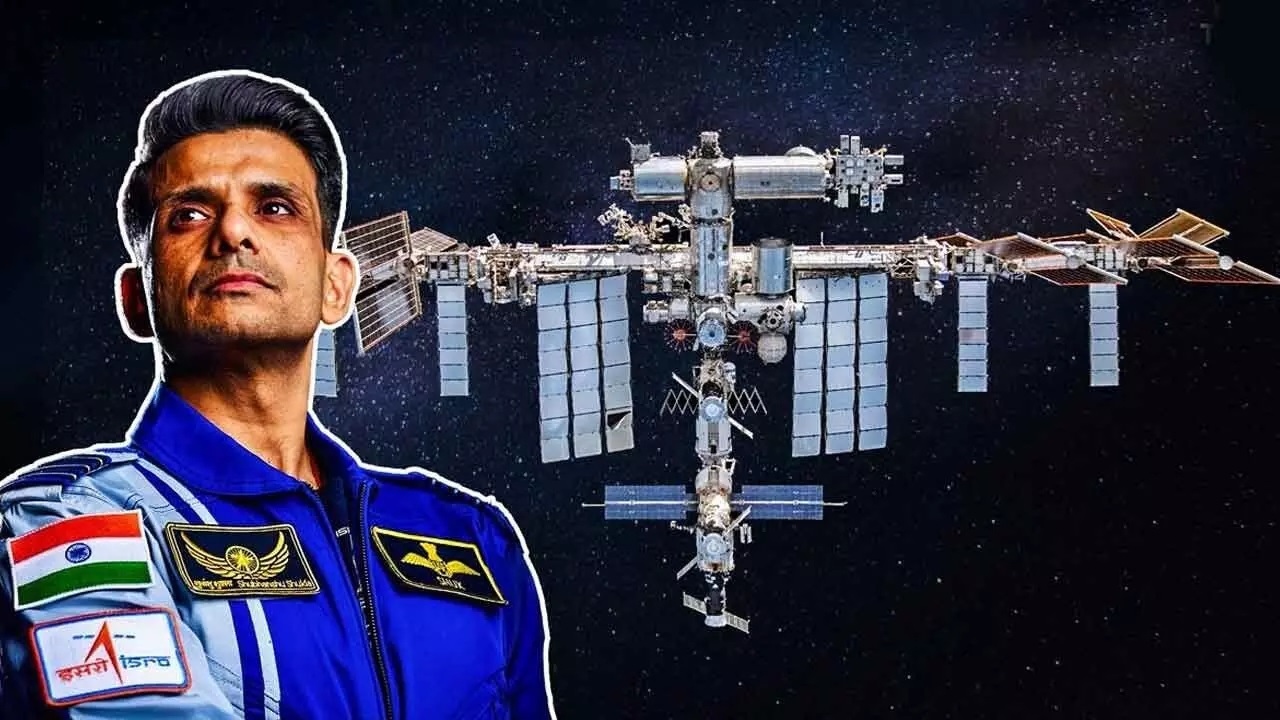
A monumental step in Indo-US space collaboration, the Axiom-4 mission—dubbed Mission Akash Ganga—is the product of a landmark joint statement between India and the United States during Prime Minister Narendra Modi’s 2023 state visit. It signifies a turning point for the Indian space program, as Group Captain Shubhanshu Shukla becomes the first Indian to reach the International Space Station (ISS) and only the second Indian astronaut to travel into space after Rakesh Sharma in 1984.
This mission, led by Axiom Space in partnership with NASA, also includes three other astronauts: Peggy Whitson, the legendary American astronaut with the most cumulative days in space among women; Tibor Kapu from Hungary; and Slawosz Uznanski-Wisniewski from Poland. Their destination: the ISS, orbiting Earth as a platform for cutting-edge research and global cooperation.
Countdown to Take-off: Historic Launch Details
The Axiom-4 mission is scheduled to lift off at 12:01 pm on Wednesday, June 25, from Launch Complex 39A at NASA’s Kennedy Space Center in Florida—the same hallowed ground from which Neil Armstrong embarked on Apollo 11 in 1969. The crew will travel aboard a SpaceX Crew Dragon spacecraft, launched via Falcon-9 rocket, symbolizing the convergence of government and private sector capabilities in modern spaceflight.
Meet the Man: Shubhanshu Shukla
At 39 years old, Group Captain Shubhanshu Shukla, a decorated Indian Air Force fighter pilot, has been chosen by ISRO (Indian Space Research Organisation) for this critical role. In preparation, Shukla has been under strict precautionary quarantine for over a month, a routine yet crucial measure to prevent health risks in space.
This mission doesn’t just symbolize personal achievement—it signifies national pride, scientific pursuit, and strategic partnership. It propels India back into the elite spacefaring community with a human presence aboard the ISS.
Science in Orbit: Mission Objectives
Over the course of two weeks, the four-member crew will conduct 60 scientific experiments, ranging across disciplines such as life sciences, materials research, and microgravity physics. Notably, seven experiments have been proposed by Indian researchers, marking the country’s active scientific contribution to the mission.
Beyond science, Shukla is also scheduled to participate in a space-to-Earth outreach session, including an interaction with a VIP from India, amplifying public engagement with space exploration.
Challenges on the Ground: Delays and Determination
The Axiom-4 launch faced multiple postponements since its initial scheduled date of May 29, delayed five times due to a mix of technical issues and weather conditions, including an oxidizer leak. The current launch date—June 25—is NASA’s sixth revision, underscoring the mission’s complexity and the meticulous safety protocols of human spaceflight.
A Collaborative Future in Space
Axiom-4 is the fourth private astronaut mission to the ISS, reflecting a shift toward public-private partnerships in space exploration. More importantly, it is a direct outcome of strengthened Indo-US space relations, demonstrating how geopolitical diplomacy can inspire cutting-edge scientific collaboration.
A Leap Beyond Borders
Captain Shubhanshu Shukla’s journey to the ISS is more than a flight—it is a symbolic leap for India into a new era of global space leadership. In joining hands with the United States and private players like Axiom and SpaceX, India is not just reaching for the stars—it is co-piloting the future. With experiments, diplomacy, and ambition aboard, Mission Akash Ganga shines as a beacon of what collaborative space exploration can achieve.
(With agency inputs)