A Generation in Revolt
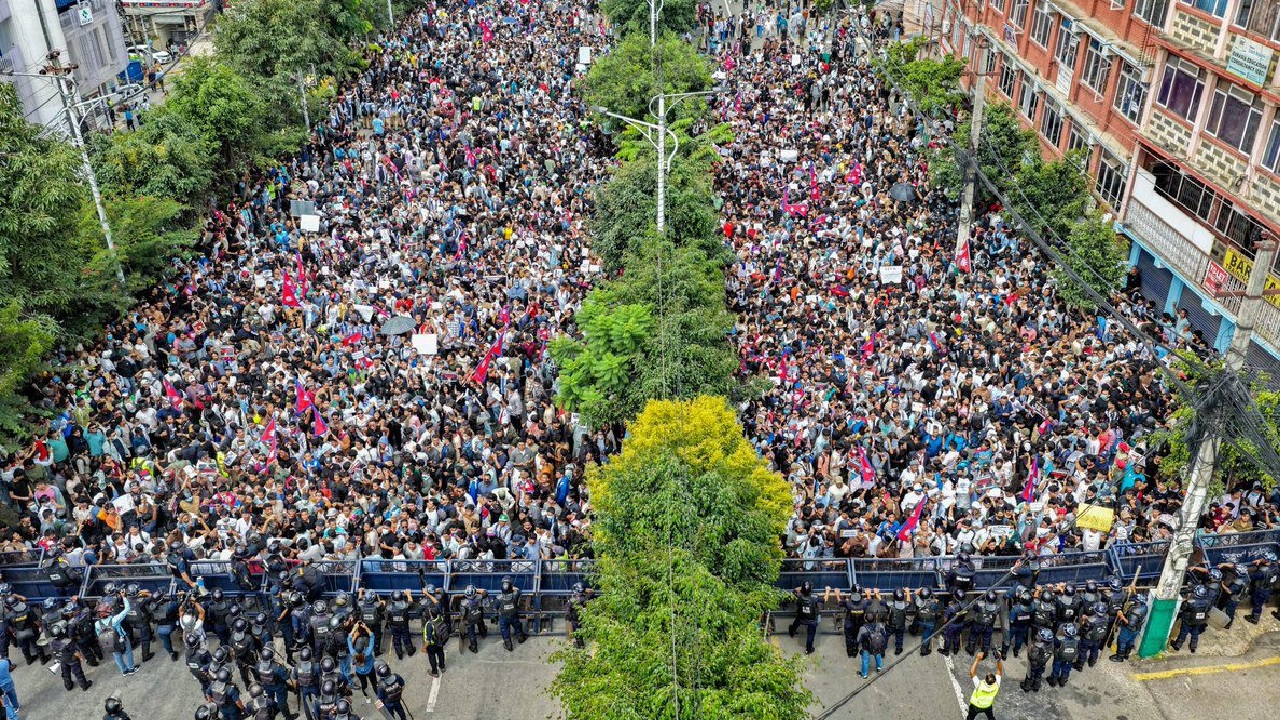
Nepal has witnessed one of its most turbulent weeks in recent memory. A sweeping ban on 26 social media platforms—including Facebook, X, and WhatsApp—sparked a powerful backlash led primarily by Gen Z activists. Within days, protests escalated into violent confrontations in Kathmandu and beyond, leaving 19 people dead and more than 300 injured.
The government has now rolled back the ban after an emergency cabinet meeting, acknowledging the scale of public anger. For Nepal’s youth, this confrontation was not only about access to digital platforms but also about freedom of expression, participation in governance, and a rejection of perceived state overreach.
The Ban and Its Withdrawal
The Ministry of Communication, Information and Broadcasting had originally justified the restrictions by citing the platforms’ failure to register locally. However, within three days, the ban unraveled under immense public pressure. Minister Prithvi Subba Gurung confirmed that agencies have been ordered to restore access to all blocked platforms, urging young protesters to withdraw their agitation.
By late Monday night, Nepal’s most popular social media apps were back online, but the sense of distrust between the government and the country’s tech-savvy youth remained palpable.
When Protests Turned Deadly
The demonstrations began peacefully outside Parliament but soon spiraled into chaos. Eyewitnesses reported that some protesters forced their way into the parliamentary complex, prompting police to respond with water cannons, tear gas, and eventually live ammunition.
The clashes spread rapidly from Kathmandu to cities including Pokhara, Butwal, Bhairahawa, Bharatpur, Itahari, and Damak. Nepal Police confirmed that 19 deaths occurred in the capital, while two more protesters were killed in Sunsari district in the east. The scale of violence compelled the government to call in the Nepali Army, which took control of key areas around Parliament in New Baneshwor.
Political Fallout and Resignation
The bloodshed triggered immediate political consequences. Home Minister Ramesh Lekhak, representing the Nepali Congress within Prime Minister KP Sharma Oli’s coalition government, resigned on “moral grounds,” citing the “unimaginable loss of life.”
His resignation underscored growing cracks in the ruling alliance. The Nepali Congress had already opposed the ban, and several of its ministers walked out of the Cabinet meeting when Oli initially refused to reverse course. The coalition now faces deepening rifts, with Oli convening urgent meetings at his Baluwatar residence to hold the alliance together.
Oli’s Defense: Regulation, Not Suppression
Prime Minister Oli expressed sorrow over the deaths but insisted that the government’s intent was not censorship, but regulation. He alleged that “unwanted elements infiltrated peaceful protests,” forcing authorities to act to prevent large-scale damage.
Oli announced the formation of a probe committee tasked with submitting its findings within 15 days. Yet, critics argue that the administration gravely underestimated the social and political importance of digital spaces for young Nepalis, particularly a generation that relies on them for activism, community, and economic opportunity.
Lessons in Trust and Governance
The lifting of the ban may have restored access to social media, but the violent protests have left scars on Nepal’s political landscape. The deaths of nearly 20 young citizens have transformed a policy misstep into a generational flashpoint.
For Nepal’s leadership, the episode is a stark reminder that governance in the digital age demands dialogue, transparency, and accountability. For Gen Z, it has reinforced their political clout and their role as guardians of free expression.
If the government truly seeks to regulate rather than restrict, it must rebuild trust through consultation and reform rather than coercion. Otherwise, Nepal risks deepening its divide between state authority and its most restless generation.
(With agency inputs)