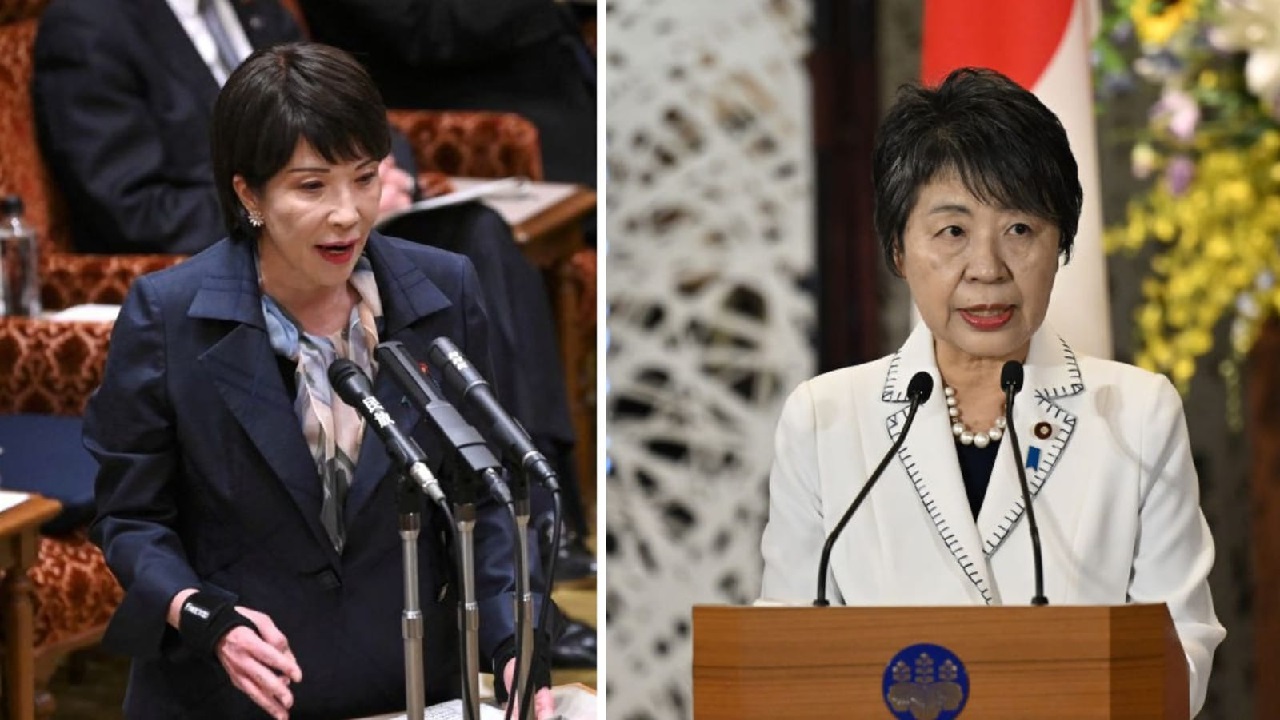
Political Transition Amid Uncertainty
Japan stands at a political crossroads following Prime Minister Shigeru Ishiba’s resignation after a series of electoral setbacks. His exit has triggered a leadership contest within the ruling Liberal Democratic Party (LDP), a party that has dominated Japan’s post-war politics but recently struggled to maintain its majority in parliament. Against this backdrop, the October 4 leadership election is not just about selecting a new party leader — it could determine the nation’s future trajectory on domestic policy, defense, and diplomacy.
Sanae Takaichi: A Bold Contender
At the forefront of this race is Sanae Takaichi, a 64-year-old veteran politician and outspoken critic of China. If successful, she would become Japan’s first woman prime minister — a historic breakthrough in a political culture long dominated by men. Takaichi has run in several previous LDP contests, finishing second last year, but this time she enters the race with stronger momentum.
Her campaign emphasizes transforming public anxieties into optimism while strengthening Japan’s defenses amid rising regional tensions. Closely aligned with the late former prime minister Shinzo Abe, she advocates heavy government spending, low interest rates, and a conservative social agenda. Her frequent visits to the Yasukuni Shrine, a controversial site honoring Japan’s war dead including convicted war criminals, have drawn both domestic support and international criticism, especially from China and South Korea.
Shinjiro Koizumi: The Popular Rival
Standing in her way is Shinjiro Koizumi, 44, Japan’s agriculture minister and son of former Prime Minister Junichiro Koizumi. Charismatic and telegenic, Koizumi is widely popular among the public. Recent opinion polls by Jiji Press place him as the leading candidate for prime minister, with Takaichi trailing closely behind.
Koizumi’s appeal stems from his youthful image, political pedigree, and recent efforts to stabilize rice prices, a crucial issue for rural voters. Backed by Finance Minister Katsunobu Kato, his campaign stresses party unity and practical economic reforms. By connecting with younger voters and addressing agricultural concerns, he positions himself as a modernizer who can bridge Japan’s rural-urban divide.
Other Challengers in the Race
Though Takaichi and Koizumi dominate headlines, three other candidates are also vying for the top spot. Chief Cabinet Secretary Yoshimasa Hayashi, a seasoned moderate, promises to combine stability with growth. Former Foreign Minister Toshimitsu Motegi and former Economic Security Minister Takayuki Kobayashi have also entered the fray, offering proposals ranging from tax reforms to tougher rules on foreign acquisitions of Japanese assets.
Despite their participation, analysts suggest the contest is shaping up to be a duel between Takaichi and Koizumi — one embodying continuity with conservative hawkish policies, and the other offering generational change and pragmatic reform.
Implications for Japan’s Future
The leadership contest comes at a delicate moment for Japan. Domestically, the country is struggling to emerge from years of deflation, while externally it faces heightened security risks from China’s military assertiveness and North Korea’s missile tests. The winner of the LDP election will not only have to rebuild the party’s parliamentary strength but also reassure a public increasingly skeptical of political leadership.
Takaichi’s assertive stance on defense could reshape Japan’s security policies, aligning them more closely with Washington’s Indo-Pacific strategy. Conversely, Koizumi’s focus on economic stabilization and party cohesion might appeal more to voters seeking relief from rising costs of living and political gridlock.
A Defining Election for Japan
The upcoming leadership race is more than an internal party affair; it is a contest that could redefine Japan’s political identity. The possibility of electing its first woman prime minister signals progress in a system often criticized for gender imbalance, while Koizumi’s candidacy underscores the enduring influence of political dynasties in Japan.
A Choice Between Continuity and Change
Japan’s October leadership election symbolizes both crisis and opportunity. Ishiba’s resignation has exposed the fragility of the LDP’s dominance, but it also opens the door for renewal. Whether Japan opts for Takaichi’s hawkish, conservative leadership or Koizumi’s youthful, reformist image, the decision will have far-reaching implications — not only for Japan’s domestic recovery but also for its role in regional security.
As the LDP members prepare to vote, the world will be watching to see if Japan chooses continuity with its traditional power structures or embraces change, perhaps by making history with its first woman leader.
(With agency inputs)