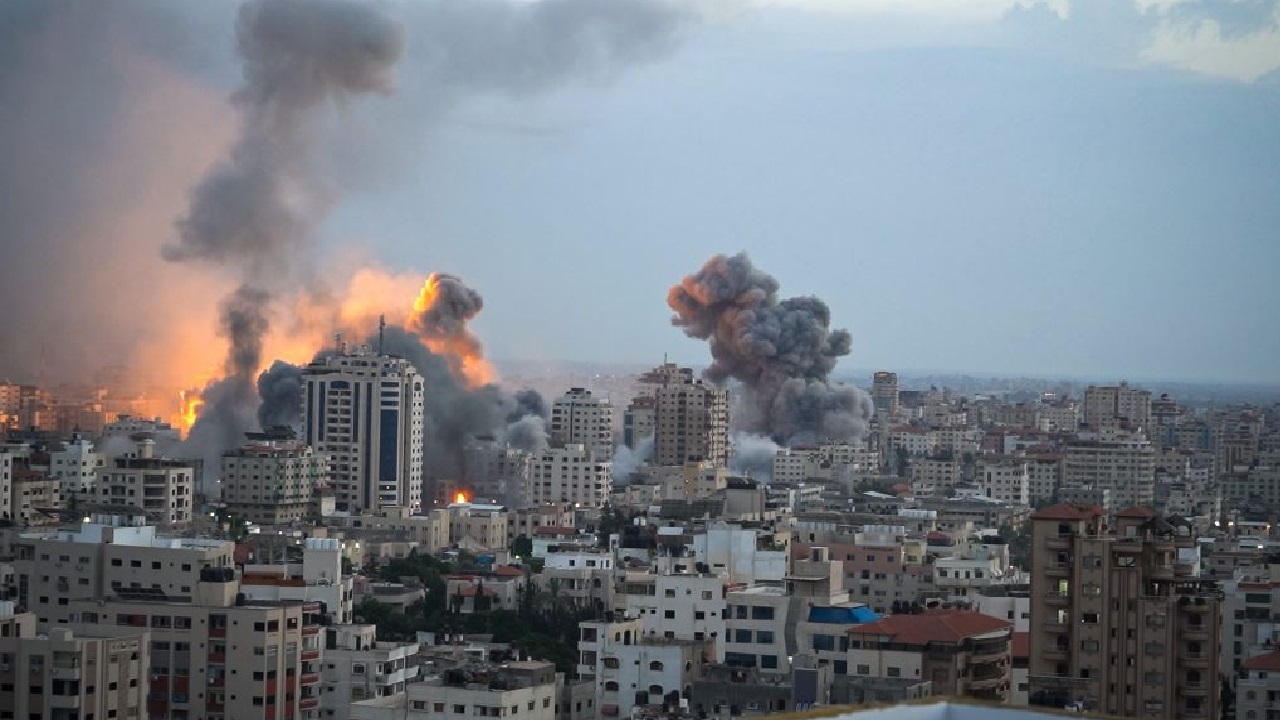
A City Under Fire
Gaza City, once the bustling heart of Palestine’s coastal enclave, is today engulfed in devastation. On September 16, Israel launched a full-scale ground offensive backed by airstrikes, drone surveillance, artillery, and naval firepower. The Israeli defense minister starkly described the situation as “Gaza is burning,” framing the offensive as an attempt to crush what Israel calls Hamas’s last major stronghold.
The onslaught, however, has come at staggering human cost. According to the United Nations, over 250,000 people have fled Gaza City in just a month, with tens of thousands more being uprooted daily. Shelters are overwhelmed, and displaced families wander southward in search of elusive safety.
UN Alarm and Mass Exodus
The UN has warned of “new waves of mass displacement” as Israeli forces intensify their urban operations. Nearly 60,000 people fled within 72 hours earlier this week alone. By Israeli estimates, as many as 450,000 civilians have already left Gaza City, figures based partly on drone and satellite surveillance.
Leaflets urging civilians to evacuate have been dropped from the sky, while Israel briefly opened additional escape routes through central Gaza. Long lines of Palestinians, some pushing carts, others crammed into rickshaws or walking on foot, have clogged the dusty roads south. Yet, aid agencies insist the designated “humanitarian zones” are woefully inadequate, lacking food, medicine, shelter, and security.
A City Reduced to Rubble
Once a vibrant cultural and commercial hub of more than a million residents, Gaza City has been hollowed into ruins. Eastern neighborhoods are now under Israeli control, while forces press deeper into districts such as Sheikh Radwan and Tel al-Hawa, tightening the noose on central and western quarters.
The human toll is compounded by the symbolic loss of a city. “They are wiping out our memories,” lamented one displaced resident, echoing the sentiment of thousands who have seen homes, schools, and markets reduced to rubble. For many, this is not the first displacement—families have been forced to move repeatedly, each time with fewer belongings and dimmer hopes.
Controversial Rhetoric
The crisis has also been inflamed by political rhetoric from Israeli leaders. Finance minister Bezalel Smotrich courted outrage by referring to Gaza as a “real-estate bonanza” during a property conference in Tel Aviv, boasting that “the demolition, the first stage in Gaza’s renewal, we have already done.” Such comments underscore a growing concern that the offensive is not only military in nature but also tied to long-term territorial ambitions.
Meanwhile, international criticism has intensified. A UN inquiry has already accused Israel of committing genocide in Gaza, a finding Israel rejects but which adds weight to calls for accountability.
The Struggle for Survival
For Palestinians, survival is now a daily ordeal. Israel’s Arabic-language spokesperson warned that “staying in Gaza City puts you at risk,” urging residents to flee south along Al-Rashid Street. Yet those fleeing face grim conditions: overcrowded camps, shortages of essentials, and ongoing strikes even in so-called safe zones. Families carrying their lives in bundles on donkey carts or overcrowded trucks epitomize the desperation.
A Bleak Crossroads
The siege of Gaza City represents a decisive moment in the conflict. Israel claims military necessity; Palestinians face a humanitarian catastrophe. The international community is confronted with a moral and political dilemma — balancing Israel’s security concerns against the undeniable human suffering unfolding daily.
Beyond the Battlefield
Gaza’s tragedy is not confined to combat zones; it extends into the erosion of dignity, heritage, and the possibility of coexistence. While Israel may justify its assault as a fight against Hamas, the destruction of a city and the displacement of hundreds of thousands carry consequences that will echo for generations.
If peace is ever to emerge from these ashes, it will require not only silencing the guns but also rebuilding trust, dignity, and accountability. Otherwise, Gaza’s burning today will become a permanent scar on tomorrow’s history.
(With agency inputs)