A New Chapter in India–UK Relations
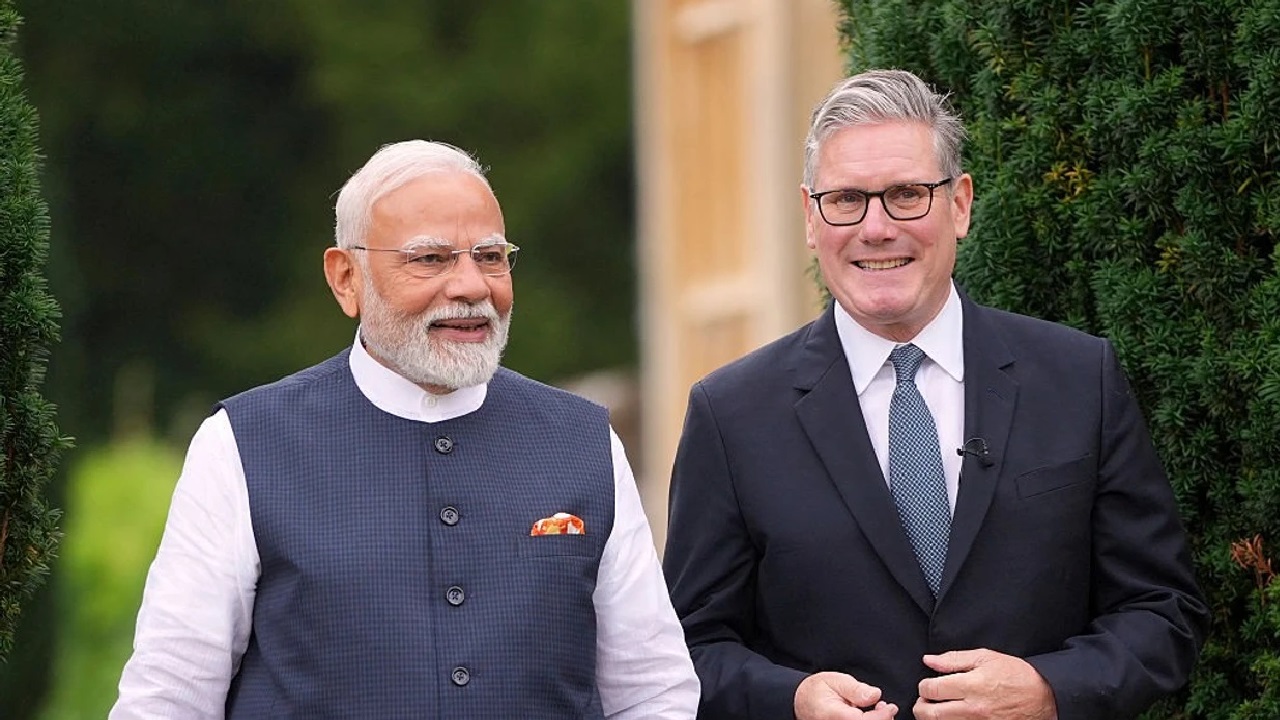
India and the United Kingdom are set to take another step in strengthening their historic relationship as British Prime Minister Keir Starmer prepares for his first official visit to India this October. Since assuming office in July last year, Starmer has prioritized closer ties with New Delhi. His upcoming trip, coinciding with the Global Fintech Fest (GFF) 2025 in Mumbai, is expected to combine diplomacy with economic and cultural engagement.
Building on the Free Trade Agreement
The visit comes in the wake of a landmark Free Trade Agreement (FTA) signed in July, India’s first bilateral trade pact with a Western nation. Under the deal, average tariffs on Indian goods entering the UK will drop from 15 percent to just 3 percent, providing a major boost for exporters in agriculture, chemicals, engineering, plastics, and marine products. UK data projects an annual trade expansion of around $33 billion, a significant achievement for New Delhi as it continues to struggle with stalled trade negotiations with the United States and the European Union.
Focus Shifts to Defence and Technology
With trade negotiations settled, Starmer and Prime Minister Narendra Modi are likely to shift attention to other pressing areas, particularly defence and emerging technologies. Last year, both nations launched the Technology Security Initiative (TSI), an ambitious platform to cooperate in quantum computing, artificial intelligence, advanced materials, semiconductors, and critical minerals. Guided by their national security advisers, the initiative aims to fortify both economies against supply chain vulnerabilities and enhance strategic resilience.
Education and Cultural Bridges
Education is expected to be another priority on Starmer’s agenda. Several leading UK universities have already announced plans to expand into India, signalling a new era of academic collaboration. The University of Southampton opened its Gurugram campus in July, while the University of Liverpool is preparing to launch in Bengaluru next year. These ventures not only provide Indian students with world-class opportunities at home but also reinforce cultural and intellectual links between the two nations.
Broader Global Context
India’s engagement with the UK stands in contrast to its more complicated negotiations with the United States. Tariff barriers as high as 50 percent continue to restrict Indian exports to the American market, while issues such as H-1B visa fees and sanctions related to Iran’s Chabahar port remain sources of friction. Against this backdrop, the India–UK FTA and related agreements, such as the Double Contribution Convention exempting Indian workers from UK social security payments for three years, highlight London as a more reliable partner at a crucial moment.
A Constructive Outlook
Starmer’s visit will be watched closely for the symbolism it carries as much as for the concrete agreements it produces. It demonstrates the UK’s recognition of India as not only a vital trading partner but also a key ally in education, technology, and defence. For India, the visit consolidates its role as a global economic player capable of shaping partnerships beyond the traditional powers. As both nations prepare to look beyond trade to deeper strategic cooperation, Starmer’s October trip could mark the beginning of a more comprehensive India–UK partnership—one rooted in shared interests, mutual respect, and a forward-looking vision.
(With agency inputs)