


India’s Lone Active Volcano Stirs Again
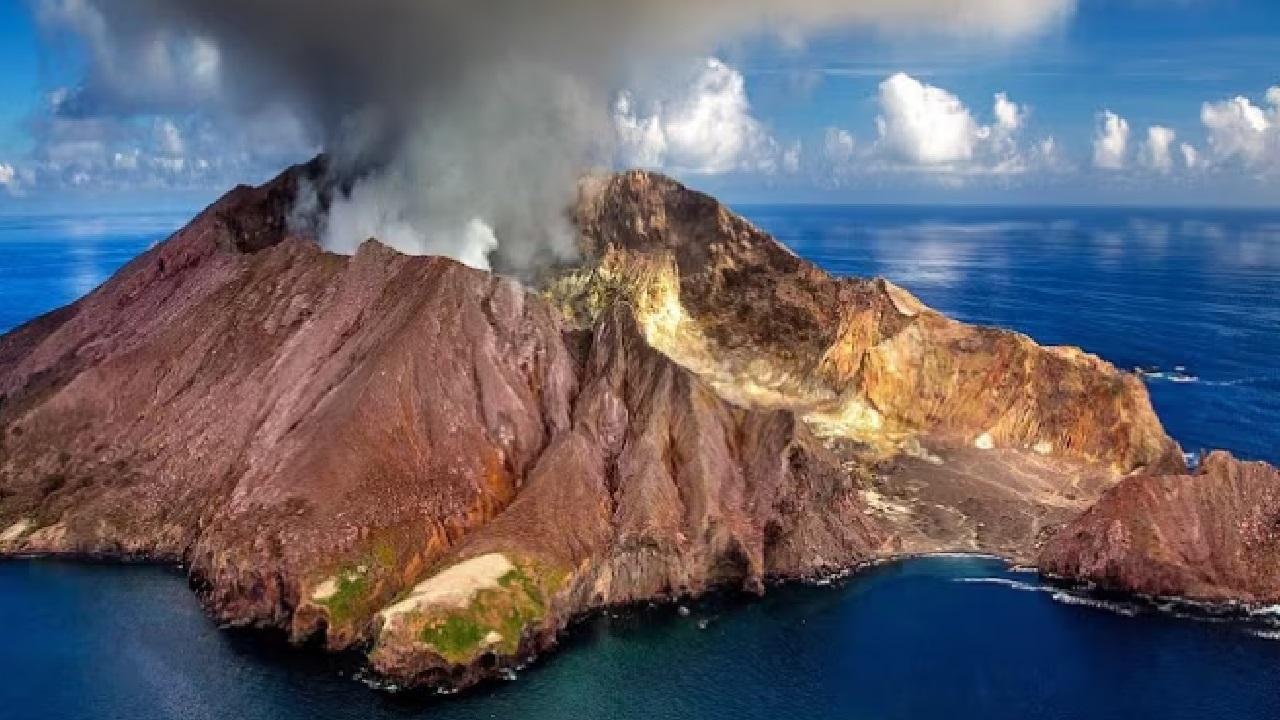
India’s only active volcano, situated on the isolated Barren Island in the Andaman Sea, erupted on September 20 following a moderate earthquake that struck the region just two days earlier. Though the event caused no reported destruction or casualties, it serves as a reminder of the volatile geological environment of the Andaman and Nicobar archipelago—a zone where powerful tectonic processes shape both land and sea.
The eruption was relatively minor, but scientists point out that the region sits on a fault system responsible for past catastrophes, including the December 2004 Indian Ocean tsunami.
The Science Behind the Blast
According to O.P. Mishra, director of the National Centre for Seismology, the fault’s coordinates align with the latitude of Barren Island and were close to the longitude of the recent quake. The seismic shaking intensified pressures within the volcano’s magma chamber, triggering what he described as a “premature magmatic eruption.”
Barren Island is a nearly circular landform, about 3.2 kilometers in diameter, rising almost two kilometers from the sea floor. Its summit reaches 300–354 meters above sea level. In essence, the region lies within a subduction zone, where the Indian Plate sinks beneath the Sunda Plate, creating the perfect geological recipe for both frequent earthquakes and occasional volcanic activity.
Scientists note that seismic disturbances rupture rocks around the magma reservoir, releasing pressure and allowing magma and gases to escape through volcanic vents. These vents then channel lava and ash to the surface, resulting in the dramatic visuals of volcanic plumes and glowing flows.
A History of Sporadic Eruptions
Barren Island’s fiery past is not new. Dormant for nearly 150 years, it roared back to life in 1991 and has experienced intermittent activity ever since. Renewed eruptions were recorded between 2017 and 2019, though each remained relatively contained. The September 2025 eruption marks the fourth since 1991, again underscoring the island’s unpredictable nature.
Its uninhabited status means minimal risk to people, but its activity offers scientists rare opportunities to study volcanic behavior in South Asia. Navy and Coast Guard units continue to monitor the area and issue maritime advisories, ensuring that shipping routes avoid potential hazards.
Other Active Volcanoes in the Region and Beyond
While Barren Island is unique to India, it is part of a much larger “Ring of Fire” stretching across the Pacific and Indian Oceans. Neighboring Indonesia alone hosts over 120 active volcanoes, including Krakatoa and Merapi, known for their destructive histories. Japan too, with Mount Sakurajima and Mount Fuji, remains under constant watch.
Globally, these volcanoes play a dual role—both as threats to human settlements and as reminders of the immense geological forces that recycle Earth’s crust. In comparison, India’s sole active volcano is relatively modest, but its link to seismic activity along the Andaman arc highlights vulnerabilities that cannot be ignored.
Preparedness Over Complacency
Although the recent eruption caused no harm, it serves as a timely wake-up call. The Andaman and Nicobar Islands remain one of India’s most seismically sensitive regions. Scientists stress the importance of strengthening monitoring networks, upgrading early-warning systems, and continuing detailed geological surveys.
Barren Island may be uninhabited, but the forces that drive its eruptions are the same ones that produced one of the deadliest tsunamis in modern history. Vigilance, therefore, is not optional—it is vital. As climate change and population pressures increase exposure to natural disasters, India must invest in long-term resilience rather than treating each eruption as an isolated event.
(With agency inputs)